Destinations
Kansas outdoors
Endless tallgrass prairie, Flint Hills horizons, chalk-pillar badlands, and one of the hemisphere's great bird marshes.
Top parks in Kansas
See all 27 parksKanopolis State Park
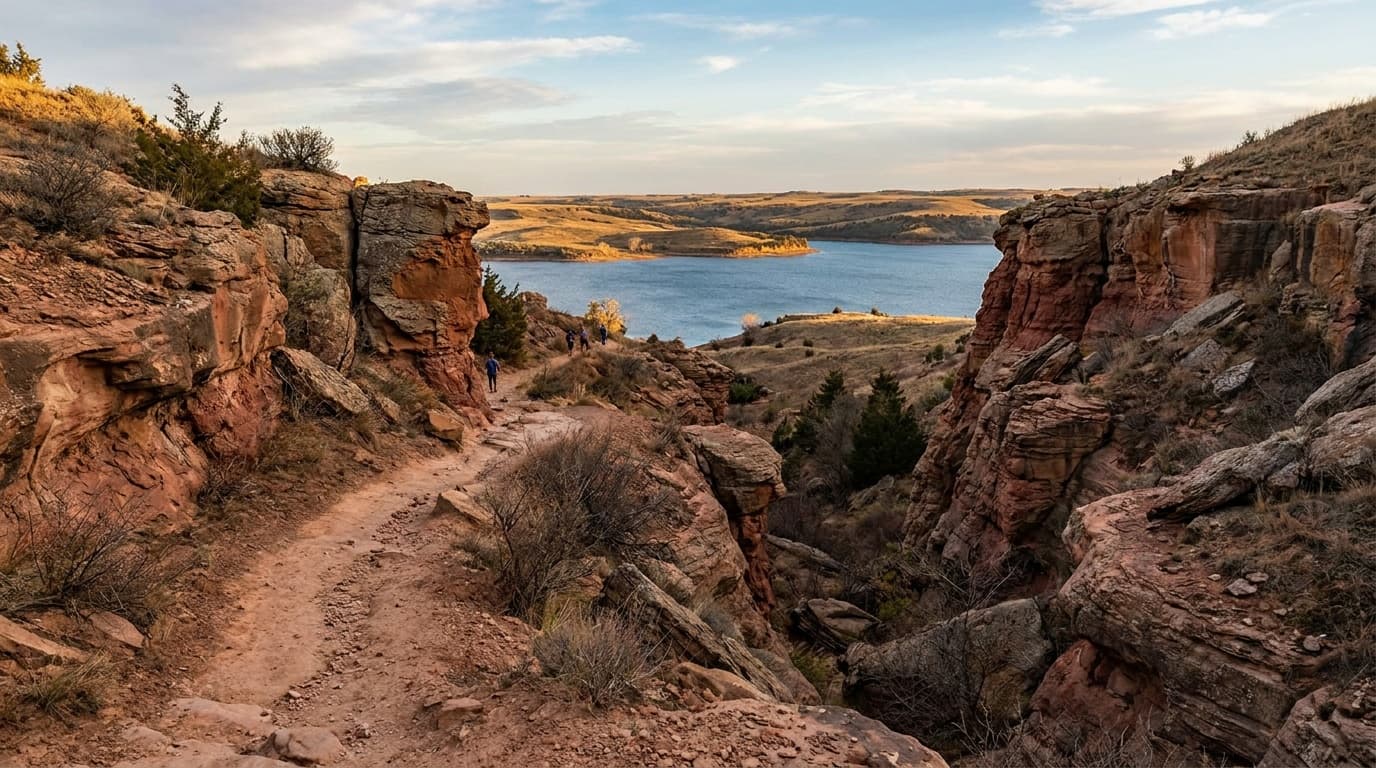
Kansas' first state park, set in the Smoky Hills around a 3,000-acre reservoir, with sandstone canyons, caves, the popular Horsethief Canyon trails, horseback riding, camping, and deluxe cabins.
Mushroom Rock State Park
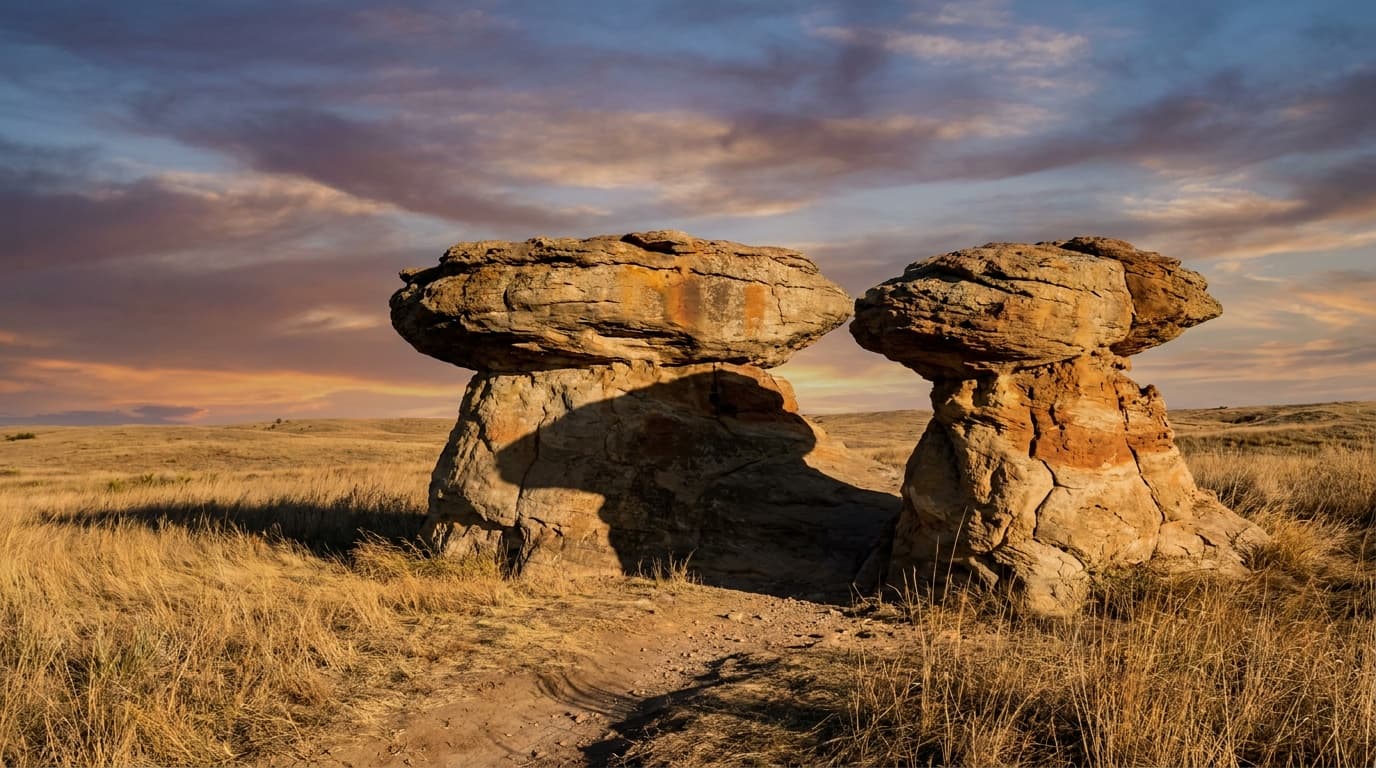
The smallest state park in Kansas at five acres, a day-use stop in the Smoky Hills built around bizarre mushroom-shaped sandstone concretions left from an ancient Cretaceous sea.

Little Jerusalem Badlands State Park
Little Jerusalem Badlands State Park showcases a mile-long stretch of 100-foot-tall spires and cliffs of eroded Niobrara Chalk deposited about 85 million years ago.
Historic Lake Scott State Park
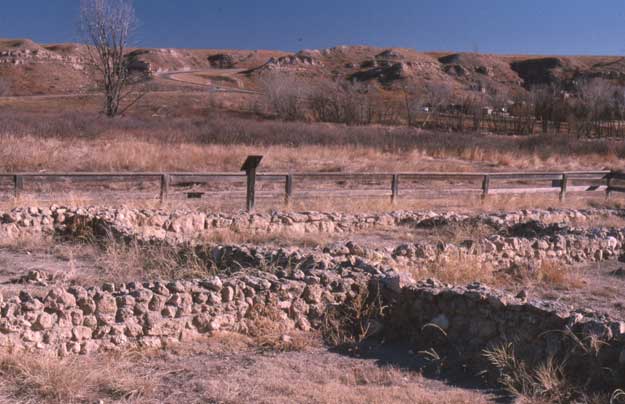
Hidden in a western Kansas canyon, Historic Lake Scott State Park is an oasis of natural springs, wooded canyons, craggy bluffs, and early American history.

Cross Timbers State Park
Cross Timbers State Park lies on Toronto Reservoir amid forested flood plains, prairie terraces, and oak savanna with diverse flora and fauna.

El Dorado State Park
El Dorado State Park sits at the edge of the Flint Hills with about 2,000 acres of park and 4,000 acres of wildlife area surrounding the lake.

Clinton State Park
Clinton State Park sits on Clinton Reservoir with campgrounds, cabins, a marina, a swim beach, and an extensive hike and bike trail.
Tuttle Creek State Park
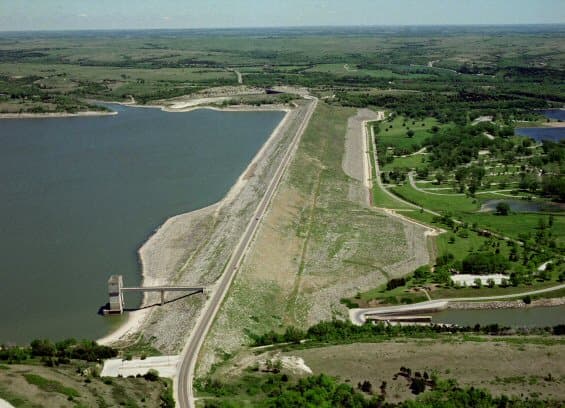
Tuttle Creek State Park in northeast Kansas comprises five units across 1,200 acres on Tuttle Creek Lake in the Flint Hills.

Cedar Bluff State Park
Cedar Bluff State Park is divided into two distinct areas, Bluffton and Page Creek, along the shorelines of Cedar Bluff Reservoir.
Planning a Kansas trip
Kansas surprises people. The flat-wheat-field reputation hides a state that is mostly rolling prairie, limestone bluffs, sandstone canyons, and some of the biggest open sky you will find anywhere. There is no national park here, but the Tallgrass Prairie National Preserve near Strong City protects almost 11,000 acres of the tallgrass ecosystem that once covered 170 million acres of North America, with more than 40 miles of trail and a free-roaming bison herd. It is the closest thing the country has to a window on what the Great Plains looked like before the plow.
The headliner for most visitors is the Flint Hills, the last large stand of unbroken tallgrass prairie on Earth. The Flint Hills Trail State Park runs about 93 improved miles of crushed limestone from Osawatomie toward Council Grove, built on an old rail line and friendly to hikers, gravel bikers, and horseback riders. For more vertical and variety, head west to Kanopolis State Park, where 27-plus miles of trail wind through sandstone bluffs and box canyons, or Scott State Park in the far west, an oasis of natural springs and wooded canyons. Bird people make the pilgrimage to Cheyenne Bottoms and Quivira National Wildlife Refuge near Great Bend, a wetland complex of international importance where hundreds of thousands of shorebirds and cranes stage during migration. And for sheer otherworldliness, Monument Rocks rises 70 feet of chalk pillars and arches out of the western plain.
Go in spring (April to June) or fall (September to October). Those shoulder seasons bring mild, mostly sunny days, lush or golden prairie, and the big migration windows for the marshes. Summer runs hot and humid, often 85 to 95F, with real thunderstorm and tornado potential; winter sits cold around 25 to 40F. Whenever you go, pack for sun and wind first: a brimmed hat, sunglasses, layers you can peel, and more water than feels necessary, because shade is scarce out on the prairie. Add sturdy trail shoes for the rocky Kanopolis and Scott canyons, and binoculars if the wetlands are on your list.
Getting around Kansas
Two airports do most of the work. Wichita Eisenhower National (ICT) sits in south-central Kansas and is the closest hub to the western parks, the Flint Hills, and the Great Bend wetlands. Kansas City International (MCI), just across the Missouri line, is the larger airport and the natural front door for eastern Kansas, including the Flint Hills Trail State Park and Tallgrass Prairie National Preserve. The two cities are about 200 miles apart, roughly a 3 to 3.5 hour drive on I-35, so a one-way fly-in, fly-out loop across the state is realistic.
Kansas is a driving state and the roads are easy: flat to gently rolling, well-signed, light traffic once you leave the metros. From Kansas City, the Tallgrass Prairie National Preserve at Strong City is about 2 hours southwest, and the eastern trailheads of the Flint Hills Trail are an hour or less. From Wichita, Cheyenne Bottoms and Quivira near Great Bend are about 1.5 to 2 hours northwest, and Kanopolis State Park is roughly 1.5 hours north. The far-west sights (Monument Rocks and Scott State Park) are the long haul, around 4 to 5 hours from Wichita, so budget an overnight in Scott City or Oakley rather than trying it as a day trip.
Gas up before long western stretches, where towns and services thin out, and watch the sky in summer: storms build fast on the plains and roads can flood. A regular car handles paved park access fine, but the Monument Rocks approach and some wildlife-area roads turn to dirt that gets slick when wet, so check conditions before heading out.
State park directory
Every Kansas state park
A source-backed inventory layer for planning breadth. Full Kit Authority guides are marked when a park has camping detail, rules, and packing notes; the rest link straight to the official page.
27 parks
2 full guides · 20 with photos
Kanopolis State Park
State Park
Kanopolis State Park, the first state park in Kansas, sits among the rolling hills, bluffs, and woods of the scenic Smoky Hills region.
- Camping
- RV Camping
- Cabins
- Hiking
Kansas Department of Wildlife and Parks
Full guideMushroom Rock State Park
State Park
Mushroom Rock State Park is the smallest state park in Kansas at five acres, known for unusual Dakota sandstone rock formations resembling giant mushrooms.
- Hiking
- Picnicking
- Historic Site
Kansas Department of Wildlife and Parks
Full guideCedar Bluff State Park
State Park
Cedar Bluff State Park is divided into two distinct areas, Bluffton and Page Creek, along the shorelines of Cedar Bluff Reservoir.
- Camping
- RV Camping
- Cabins
- Fishing
Kansas Department of Wildlife and Parks
Official pageClinton State Park
State Park
Clinton State Park sits on Clinton Reservoir with campgrounds, cabins, a marina, a swim beach, and an extensive hike and bike trail.
- Camping
- RV Camping
- Cabins
- Hiking
Kansas Department of Wildlife and Parks
Official pageCrawford State Park
State Park
Located on the edge of the Ozarks, the 500-acre Crawford State Park features six campgrounds and lakefront cabins with views of the lake.
- Camping
- RV Camping
- Cabins
- Hiking
Kansas Department of Wildlife and Parks
Official pageCross Timbers State Park
State Park
Cross Timbers State Park lies on Toronto Reservoir amid forested flood plains, prairie terraces, and oak savanna with diverse flora and fauna.
- Camping
- RV Camping
- Cabins
- Hiking
Kansas Department of Wildlife and Parks
Official pageEisenhower State Park
State Park
Eisenhower State Park covers 1,785 acres of tallgrass prairie and woodland on Melvern Lake with trails for horseback riding, biking, and hiking.
- Camping
- RV Camping
- Cabins
- Hiking
Kansas Department of Wildlife and Parks
Official pageEl Dorado State Park
State Park
El Dorado State Park sits at the edge of the Flint Hills with about 2,000 acres of park and 4,000 acres of wildlife area surrounding the lake.
- Camping
- RV Camping
- Cabins
- Hiking
Kansas Department of Wildlife and Parks
Official pageElk City State Park
State Park
Elk City State Park is an 857-acre park on Elk City Reservoir where oak and hickory woodlands meet rolling meadows of bluestem and Indian grass.
- Camping
- RV Camping
- Cabins
- Hiking
Kansas Department of Wildlife and Parks
Official pageFall River State Park
State Park
Fall River State Park is a 1,107-acre blend of forested flood plains, blackjack savannas, and tall-grass prairie on Fall River Reservoir.
- Camping
- RV Camping
- Cabins
- Hiking
Kansas Department of Wildlife and Parks
Official pageGlen Elder State Park
State Park
Glen Elder State Park lies on the north shore of Glen Elder Reservoir (Waconda Lake), one of Kansas' largest lakes, in a rural setting.
- Camping
- RV Camping
- Cabins
- Hiking
Kansas Department of Wildlife and Parks
Official pageHistoric Lake Scott State Park
State Park
Hidden in a western Kansas canyon, Historic Lake Scott State Park is an oasis of natural springs, wooded canyons, craggy bluffs, and early American history.
- Camping
- RV Camping
- Cabins
- Hiking
Kansas Department of Wildlife and Parks
Official pageLittle Jerusalem Badlands State Park
State Park
Little Jerusalem Badlands State Park showcases a mile-long stretch of 100-foot-tall spires and cliffs of eroded Niobrara Chalk deposited about 85 million years ago.
- Hiking
- Wildlife Viewing
Kansas Department of Wildlife and Parks
Official pageMilford State Park
State Park
Milford State Park is a diverse 1,084-acre area on Milford Lake, the state's largest reservoir, serving campers, boaters, anglers, and trail users.
- Camping
- RV Camping
- Cabins
- Hiking
Kansas Department of Wildlife and Parks
Official pagePomona State Park
State Park
Pomona State Park is a 490-acre park on Pomona Reservoir in a transition zone from prairie to eastern woodlands with shady campsites and wildlife viewing.
- Camping
- RV Camping
- Cabins
- Hiking
Kansas Department of Wildlife and Parks
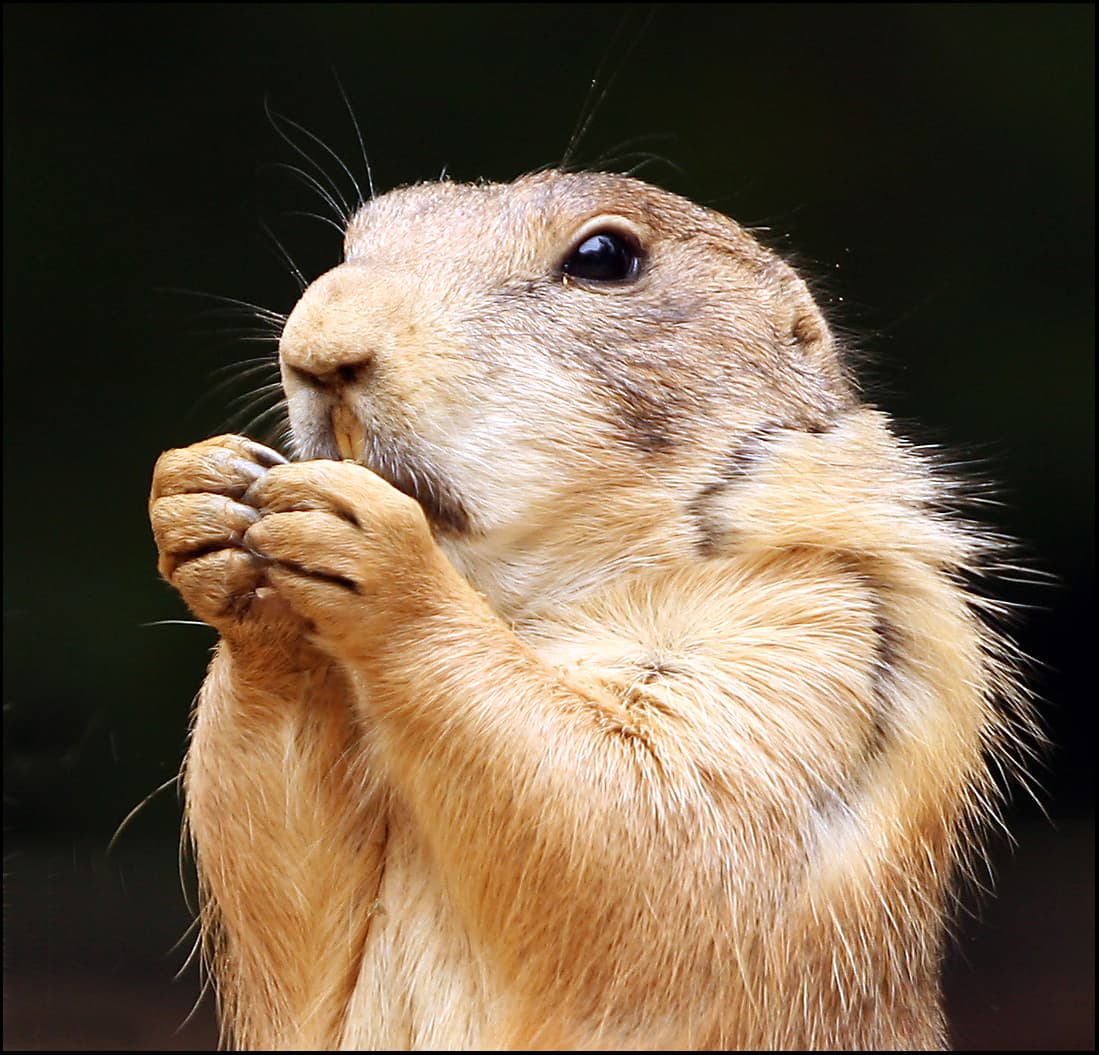
Official pagePrairie Dog State Park
State Park
Prairie Dog State Park sits on Keith Sebelius Reservoir near Norton, featuring preserved 19th century buildings and excellent fishing.
- Camping
- RV Camping
- Cabins
- Hiking
Kansas Department of Wildlife and Parks
Official pageSand Hills State Park
State Park
Sand Hills State Park is a 1,123-acre natural area north of Hutchinson preserved for its sand dunes, grasslands, wetlands, and woodlands.
- Camping
- Hiking
- Biking
- Wildlife Viewing
Kansas Department of Wildlife and Parks
Official pageTuttle Creek State Park
State Park
Tuttle Creek State Park in northeast Kansas comprises five units across 1,200 acres on Tuttle Creek Lake in the Flint Hills.
- Camping
- RV Camping
- Cabins
- Hiking
Kansas Department of Wildlife and Parks
Official pageWebster State Park
State Park
Webster State Park is an 880-acre prairie setting of rolling hills on Webster Reservoir where visitors often see deer, turkeys, quail, and pheasants.
- Camping
- RV Camping
- Cabins
- Hiking
Kansas Department of Wildlife and Parks
Official pageWilson State Park
State Park
Located in the heart of the Smoky Hills, Wilson State Park features a rugged Wilson Reservoir shoreline punctuated by scenic cliffs and rocky outcrops.
- Camping
- RV Camping
- Cabins
- Hiking
Kansas Department of Wildlife and Parks
Official pageCheney State Park
State Park
Cheney State Park spreads along Cheney Reservoir with two shore areas offering campsites, cabins, marinas, and nature trails.
- Camping
- RV Camping
- Cabins
- Hiking
Kansas Department of Wildlife and Parks
Official pageFlint Hills Trail State Park
State Park
Flint Hills Trail State Park is a 118-mile rail-trail from Osawatomie to Herington, the longest trail in Kansas, crossing tallgrass prairie.
- Hiking
- Biking
- Horseback Riding
- Wildlife Viewing
Kansas Department of Wildlife and Parks
Official pageHillsdale State Park
State Park
Hillsdale State Park sits south of the Kansas City metro on Hillsdale Reservoir with more than 12,000 acres of park and wildlife area.
- Camping
- RV Camping
- Hiking
- Fishing
Kansas Department of Wildlife and Parks
Official pageKaw River State Park
State Park
Kaw River State Park offers forested trails and access to the Kansas River across 76 acres on the south bank in west Topeka.
- Hiking
- Biking
- Fishing
- Wildlife Viewing
Kansas Department of Wildlife and Parks
Official page



Show 3 more Kansas parks
Lovewell State Park
State Park
Lovewell State Park in north-central Kansas offers camping, fishing, wildlife watching, and special events along Lovewell Reservoir.
- Camping
- RV Camping
- Cabins
- Fishing
Kansas Department of Wildlife and Parks
Official pageMeade State Park
State Park
Meade State Park rests in the high plains of southwest Kansas with an 80-acre lake and 440 surrounding acres of campsites and wildlife area.
- Camping
- RV Camping
- Hiking
- Fishing
Kansas Department of Wildlife and Parks
Official pagePerry State Park
State Park
Perry State Park offers shaded camping among extensively forested rolling hills on Perry Reservoir, with horse and biking trails through upland forest.
- Camping
- RV Camping
- Cabins
- Hiking
Kansas Department of Wildlife and Parks
Official page
Inventory source: USGS PAD-US 4.1. Photos are public-domain or Creative Commons via Wikimedia Commons, credited per image. Official reservations and rules remain state-specific, so use the state booking links before committing to dates.
Frequently asked questions
What is the best national park in Kansas?
Kansas has no national park, but the closest equivalent is Tallgrass Prairie National Preserve near Strong City, run by the National Park Service. It protects almost 11,000 acres of the tallgrass prairie that once blanketed the Great Plains, with over 40 miles of trail and a free-roaming bison herd. The popular Windmill Pasture loop (about 3 miles) gives you the big Flint Hills views and a good chance of seeing the bison.
When is the best time to visit Kansas state parks?
Aim for spring (April to June) or fall (September to October), when days are mild and mostly sunny and the prairie is either green or golden. These shoulder seasons also line up with peak bird migration at Cheyenne Bottoms and Quivira. Summer is hot and humid (often 85 to 95F) with afternoon thunderstorms, and winter is cold (roughly 25 to 40F), so the in-between months are the sweet spot.
What outdoor activities is Kansas known for?
Prairie hiking and gravel biking lead the list, especially the 90-plus mile Flint Hills Trail State Park and the canyon trails at Kanopolis and Scott state parks. Kansas is also a world-class birding destination: Cheyenne Bottoms and Quivira National Wildlife Refuge draw a huge share of North America's migrating shorebirds and cranes each spring and fall. Add in lake fishing, paddling at reservoir parks like Clinton near Topeka, and stargazing under the wide western sky.