Skip to content
KITAUTHORITY
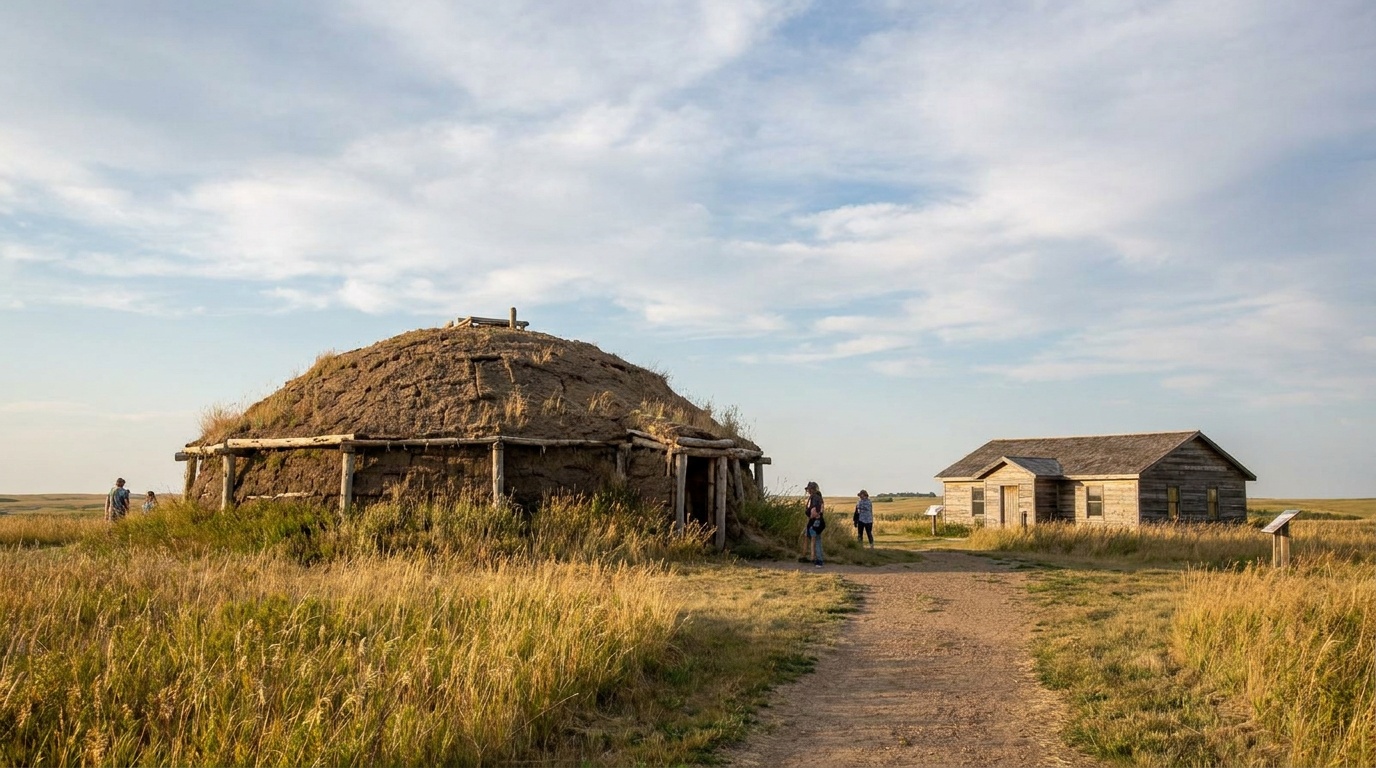
The full-scale reconstructed earthlodge at Knife River Indian Villages beside the visitor center, rounded earth-and-timber dome on the prairie under a wide North Dakota sky

National Park Service · North Dakota

Knife River Indian Villages National Historic Site

The remains of Hidatsa and Mandan earthlodge villages on the Upper Missouri, with a full-scale reconstructed earthlodge and the homeland of Sakakawea.

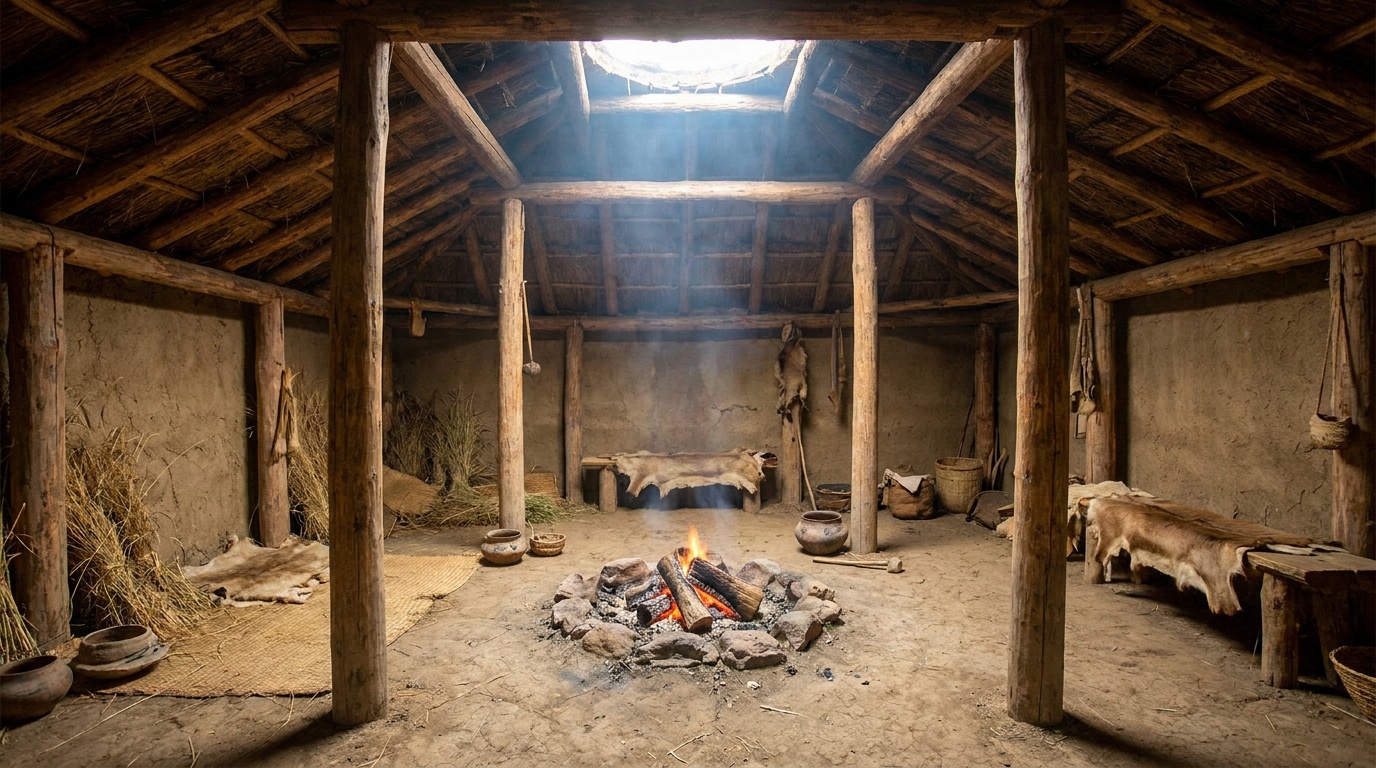
Interior of the reconstructed earthlodge at Knife River, central fire pit, timber post frame, light from the smoke hole above

Field briefing

Knife River Indian Villages National Historic Site changes fast with season and elevation.

Before you go

Knife River Indian Villages preserves the remains of Hidatsa and Mandan earthlodge villages on the Upper Missouri, where farming peoples lived for centuries and which were the homeland of Sakakawea.

The site is free, and the highlights are a full-scale reconstructed earthlodge you can enter, with hourly ranger tours in summer, and a 1.3-mile trail past the circular depressions of hundreds of vanished lodges. There is no camping at the site, so pair it with Cross Ranch State Park or the Lewis and Clark sites downstream.

Best window
May to September for mild weather and hourly earthlodge tours
Signature routes
Reconstructed earthlodge, Village trail and depressions
Pack focus
Water, weather checks, layers

The landmarks worth the trip. Tap any photo to enlarge.

Location
North Dakota
Established
1974
Size
1,758 acres
Best time
May to September for mild weather and hourly earthlodge tours
Entrance
Free, no entrance fee or pass required
Nearest airport
Bismarck (BIS) about 1 hour; Minot (MOT) about 1.75 hours

When to go

Weather, crowds, and what the season changes about the trip.

Spring

Moderate crowds

Cool and windy on the prairie, with the river high and green grass returning.

Pack Wind layer, sun protection, and shoes for the prairie-and-river trail.

Summer

High crowds

Warm days with full prairie growth and ranger-led earthlodge tours hourly.

Pack Sun shirt, water, and insect repellent for the riverside trail.

Fall

Moderate crowds

Crisp, comfortable days and golden prairie, a fine time to walk the trail.

Pack Warm layer for cool mornings and sun protection on the open trail.

Winter

Low crowds

Cold and snowy, with the trail open and shorter visitor center hours.

Pack Full winter gear, traction, and a check of seasonal hours before you go.

Top things to do

  • Reconstructed earthlodge

    A full-scale earthlodge beside the visitor center you can step inside, the best way to picture how the Hidatsa and Mandan lived. Ranger-led tours run hourly in summer.

  • Village trail and depressions

    A 1.3-mile trail past the circular depressions left by hundreds of earthlodges at the Awatixa Xi'e and Awatixa villages along the Knife River.

  • Sakakawea connection

    These villages were the homeland of Sakakawea, who joined the Lewis and Clark Expedition nearby. The site interprets that history and the wider fur-trade era.

How long to spend

Make Reconstructed earthlodge the timed anchor

Put the timed or highest-demand stop first, then keep the rest of the day close and low-friction. For one day in Knife River Indian Villages National Historic Site, time Reconstructed earthlodge first, then keep Village trail and depressions and Sakakawea connection close enough that the visit still feels relaxed.

  1. 1Start with Reconstructed earthlodge: A full-scale earthlodge beside the visitor center you can step inside, the best way to picture how the Hidatsa and Mandan lived. Ranger-led tours run hourly in summer.
  2. 2Add Village trail and depressions: A 1.3-mile trail past the circular depressions left by hundreds of earthlodges at the Awatixa Xi'e and Awatixa villages along the Knife River.
  3. 3Use Sakakawea connection as the slower finish before leaving the area.

Plan your trip

Turn Knife River Indian Villages's conditions into water, pack, and sleep-system decisions.

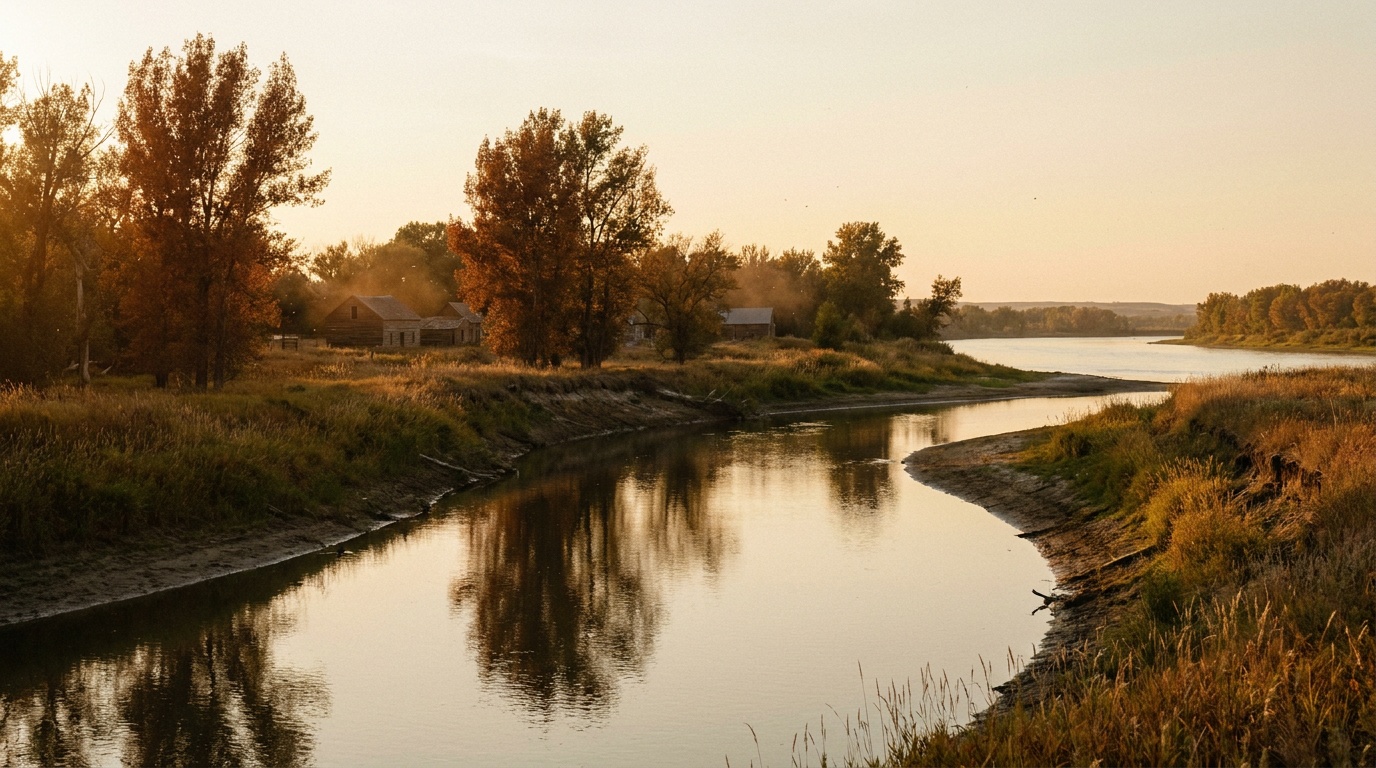
The Knife River meeting the Upper Missouri near the villages, cottonwood trees and prairie banks, calm reflective water at golden hour

Build around conditions

Let season, elevation, and weather set the plan.

Plan your trip

2 quick tools, already seeded for Knife River Indian Villages National Historic Site. Tune the numbers around temperature swings, footing, layers, and how much margin the route needs.

  1. 01Size your water for a mild day on the trail
  2. 02Find the right daypack size for a day out

What to pack

Start with the gear decisions this park changes: footing, weather, camping, and water.

Pack planning

Decide what Knife River Indian Villages National Historic Site asks of your kit before you start checking boxes.

Use this as a constraint check while you are still shaping the trip. The active checklist becomes useful once your route, dates, and sleep plan are set.

  • First constraintHydration and exposureWater, hat, sunscreen, sunglasses, Navigationmap, downloaded GPS, or a GPS watch, 3 more
  • Route realityFooting and tractionHiking boots, Hiking socks, Trekking poles
  • Load choicePack and carry systemDaypack
  • Season checkLayers for conditionsMoisture-wicking base layers, Insulated jacket, Traction devices for ice, 1 more

Checklist mode

15 items, grouped for the trip you are actually taking.

  1. Dates and season are set.
  2. Primary route, campground, or lodge is chosen.
  3. Water, footwear, and overnight needs are sized.

Gear for Knife River Indian Villages

The buying guides that match what Knife River Indian Villages asks of your kit, with our current top picks across budget and use case.

Where to stay

There is no camping or lodging at the site. The small town of Stanton is just half a mile south, with limited services, and Bismarck, about an hour southeast, has the broadest lodging and food. For camping, Cross Ranch State Park along the Missouri to the south is the closest developed option, with riverside sites. Many visitors fold the villages into a Lewis and Clark route along the Upper Missouri.

Camping reservations

Camping reservations

No camping at the site. Cross Ranch State Park along the Missouri is the closest.

Knife River is a free, day-use historic site with no campground. There is no reservation to chase; the planning move is to camp at Cross Ranch State Park downstream or base in Bismarck, and to catch the hourly summer earthlodge tours.

Reviewed June 11, 2026

Booking window

No in-park camping or reservations. Camping at nearby Cross Ranch State Park is booked through the North Dakota State Parks system.

  • The site is day-use only, with seasonal hours; the trail stays open while the visitor center is.
  • Ranger-led earthlodge tours run hourly in summer, so time your visit around them.
  • Cross Ranch State Park along the Missouri to the south offers the nearest developed camping.

Where to book or verify

Knife River plan your visit

Official NPS page with hours, the earthlodge, and the village trail.

Cross Ranch State Park camping

Nearest developed camping, with riverside sites along the Missouri to the south.

Search Recreation.gov

Check for federal campground, backcountry, tour, and permit inventory tied to this park.

Campgrounds to know

Cross Ranch State Park (nearby)

Details
Season
Warm-season camping along the Missouri River; check current dates.
Sites
About 65 tent and RV sites in two areas, with electric hookups on RV sites.
The nearest developed camping, along the Missouri downstream from the villages.

Getting there and practical info

The full-scale reconstructed earthlodge at Knife River Indian Villages beside the visitor center, rounded earth-and-timber dome on the prairie under a wide North Dakota sky

Plan the last mile as carefully as the destination.

Airports, roads, entrances, and local movement belong in the same plan.

Getting there

Get to Knife River Indian Villages National Historic Site, then move through the park without wasting the day.

Nearest airport
Bismarck (BIS) about 1 hour; Minot (MOT) about 1.75 hours
Access rhythm
Plan the last mile
Region
North Dakota
  1. Car strategy

    Knife River Indian Villages sits half a mile north of Stanton, North Dakota, on County Road 37, along the Knife River near its mouth on the Missouri.

  2. Car strategy

    Most visitors drive from Bismarck, about an hour southeast, often as part of a Lewis and Clark route that includes Fort Mandan and Cross Ranch State Park.

  3. Car strategy

    There is no public transportation, so come by car.

Pair this with lodging: the simplest base is the one that removes a real morning problem, not just the one nearest the map pin.

LocationNorth Dakota

Frequently asked questions

How much does Knife River Indian Villages cost?

It is free. There is no entrance fee and no pass required to visit Knife River Indian Villages National Historic Site.

Can you go inside the earthlodge at Knife River?

Yes. There is a full-scale reconstructed earthlodge beside the visitor center that you can step inside, with ranger-led tours running hourly in summer. It is the best way to picture how the Hidatsa and Mandan lived.

Can you camp at Knife River Indian Villages?

No. There is no camping at the site. The nearest developed camping is at Cross Ranch State Park along the Missouri River to the south, and most visitors base in Bismarck.

What is the connection to Sakakawea and Lewis and Clark?

These villages were the homeland of Sakakawea, who joined the Lewis and Clark Expedition at the nearby Mandan and Hidatsa villages. The site interprets that history along with the broader fur-trade era of the Upper Missouri.

Keep planning