Destinations
Wyoming outdoors
Wyoming is big-mountain country: glacier-carved peaks, hot-spring canyons, and nine million acres of national forest with hardly a crowd outside the famous parks.
Top parks in Wyoming
See all 28 parks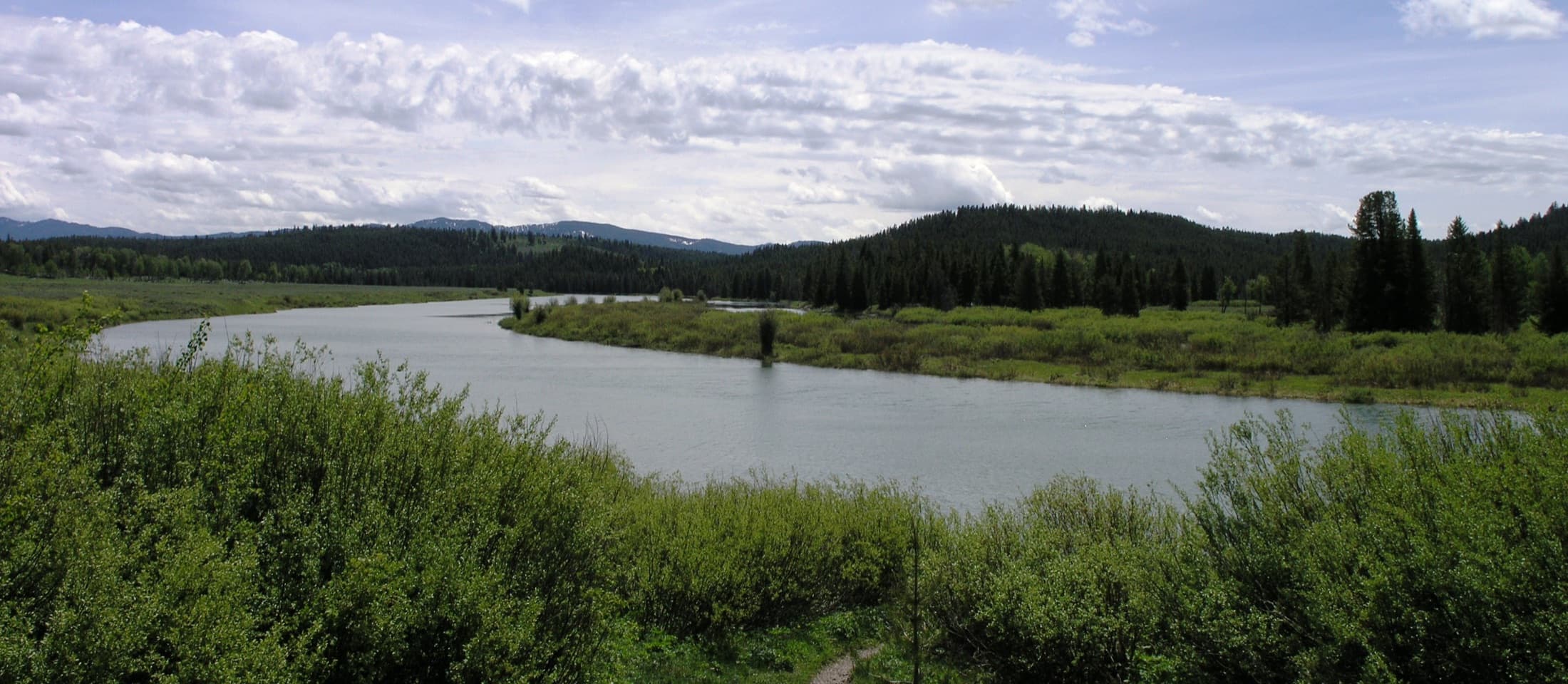
Grand Teton
Jagged 13,000-foot peaks rising straight off the valley floor, with no foothills to soften the view.
Yellowstone
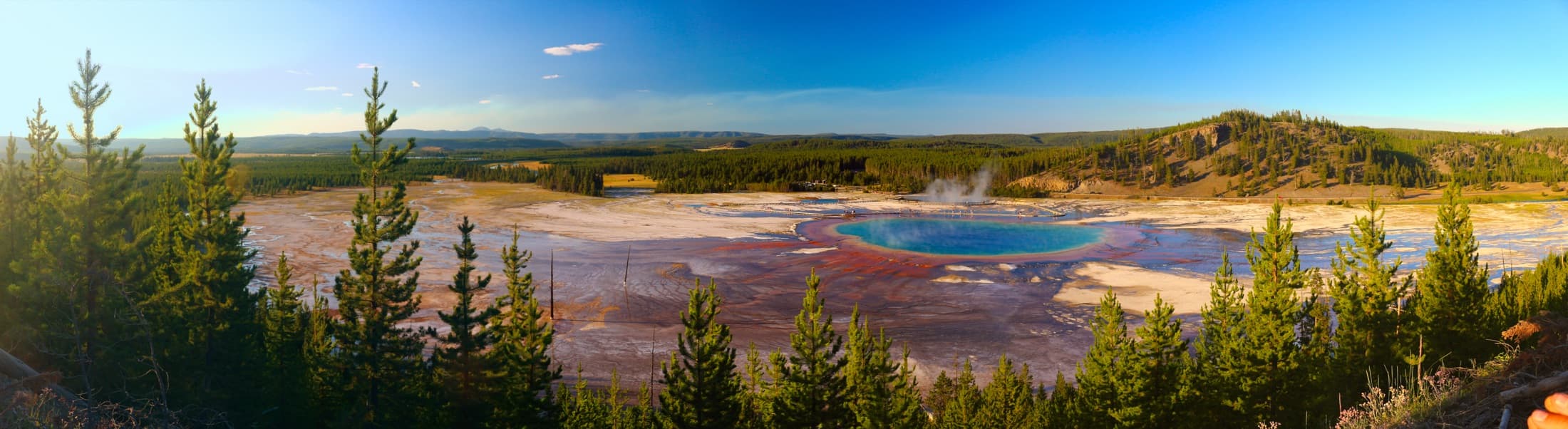
The world's first national park: geysers, canyons, and the densest wildlife show in the Lower 48.
Devils Tower National Monument
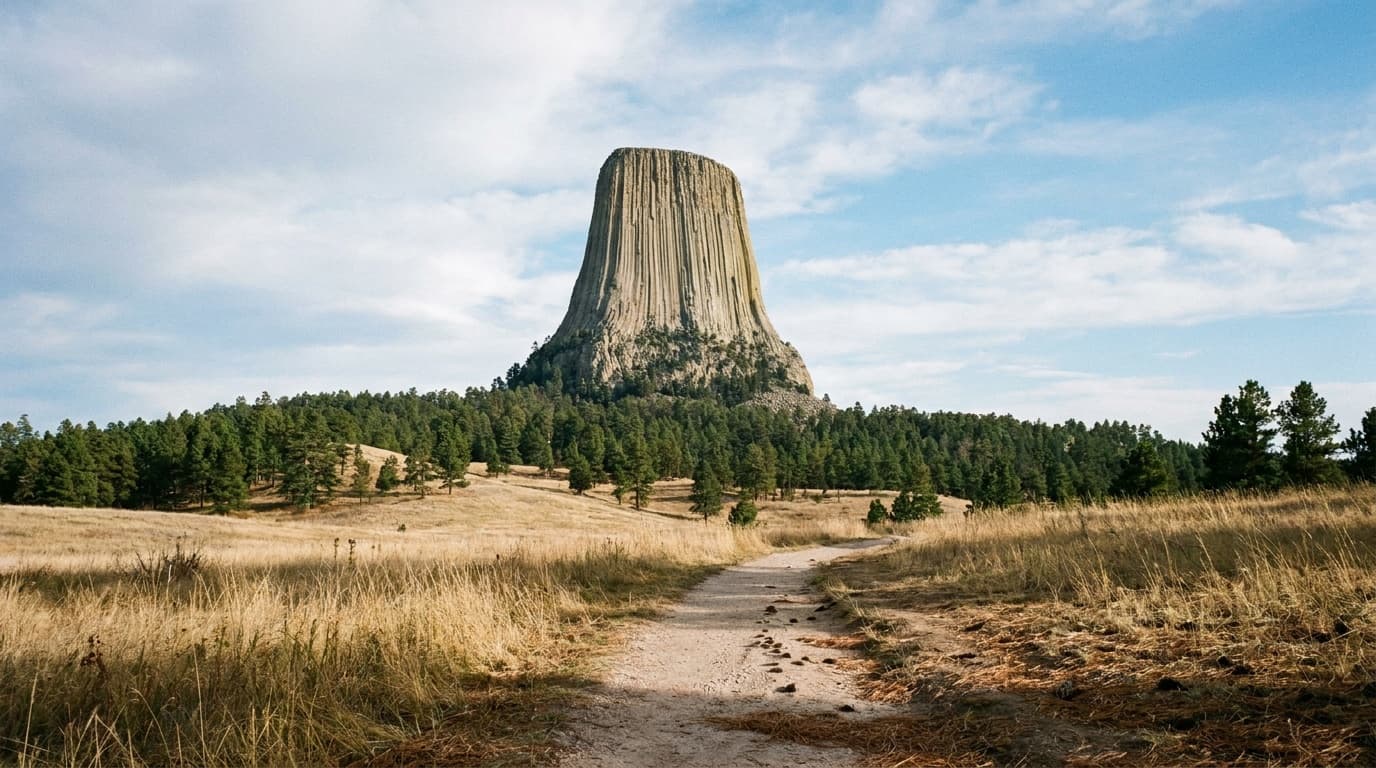
America's first national monument: a 867-foot volcanic tower above the Belle Fourche River, ringed by a walkable base trail and world-class crack climbing.
Guernsey State Park
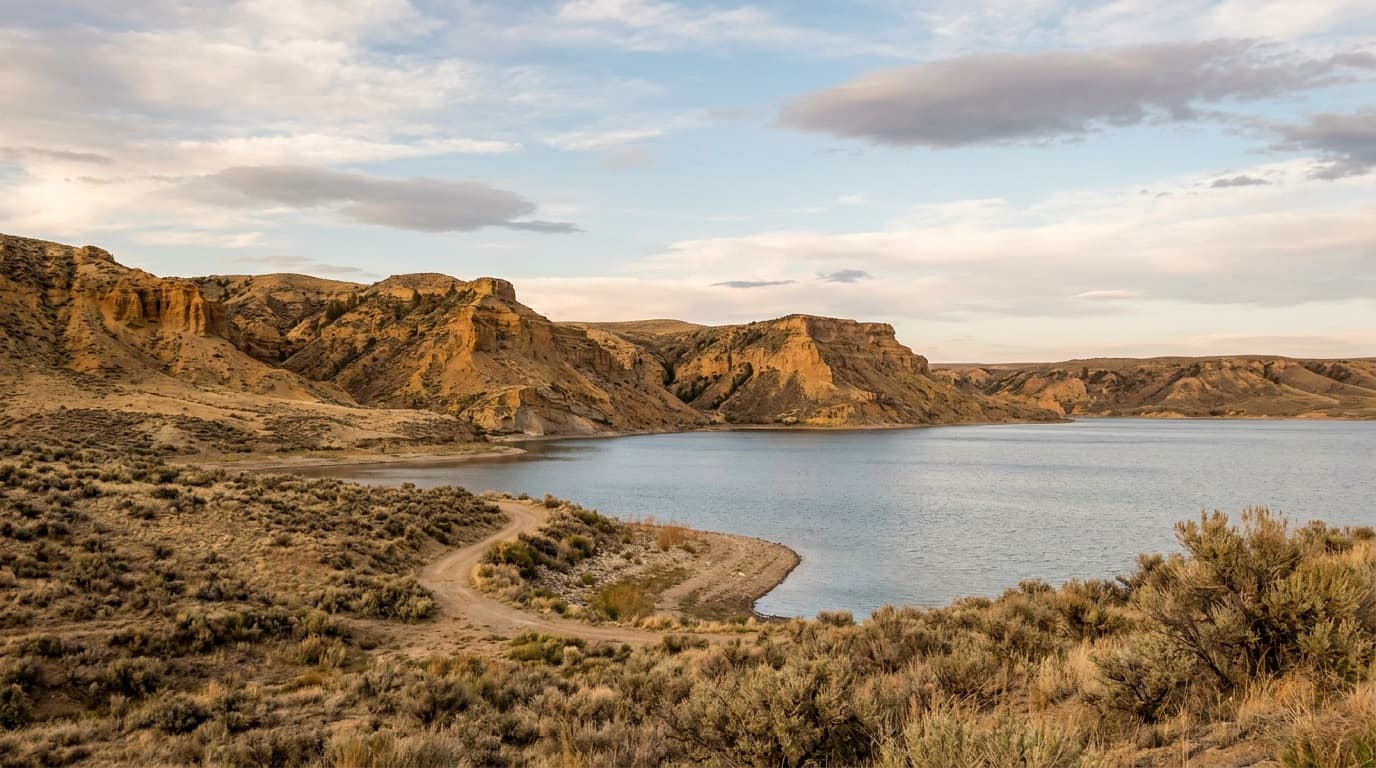
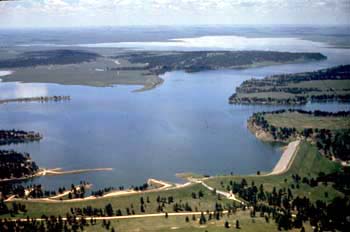
A reservoir park on the North Platte River with a landmark CCC-built museum, stone trails and shelters, swimming, boating, fishing, and abundant camping.
Sinks Canyon State Park
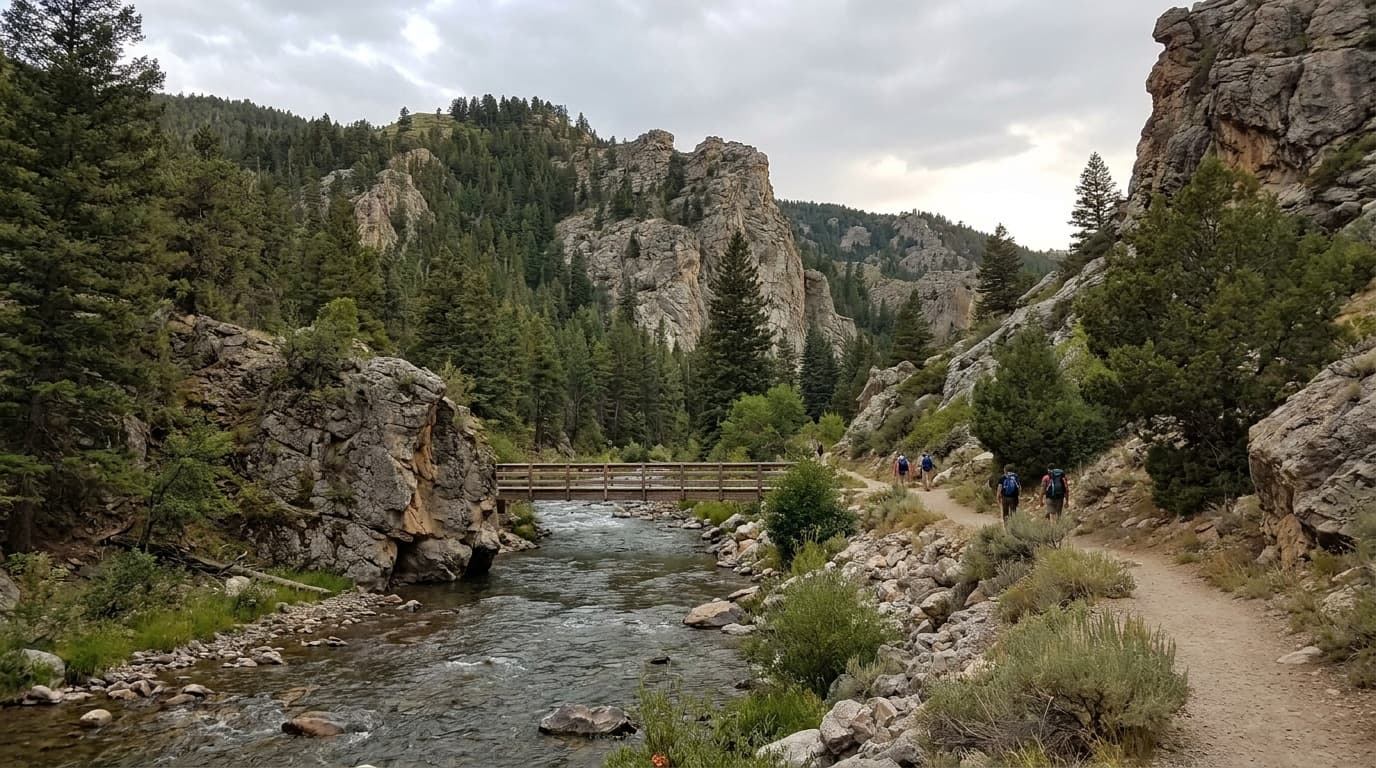
A Wind River foothills canyon outside Lander where the Popo Agie River vanishes into a limestone cave and rises again downstream, with hiking, climbing, fishing, and reservable camping.
Ames Monument State Historic Site
Completed in 1882, this 60-foot granite pyramid built by the Union Pacific Railroad stands at the highest point of the original transcontinental railroad route.
Bear River State Park
Bear River State Park is a 324-acre day-use park home to small herds of bison and elk, with several miles of paved and packed gravel trails and a visitor center.
Boysen State Park
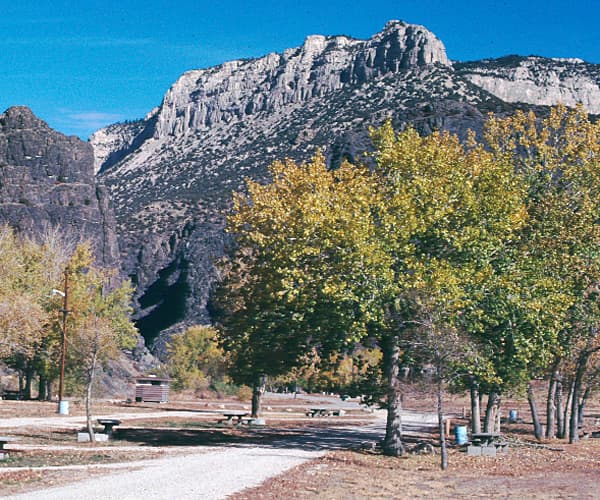
Boysen State Park surrounds Boysen Reservoir at the mouth of the Wind River Canyon, named for Asmus Boysen who built the original dam in 1908.

Buffalo Bill State Park
Buffalo Bill State Park surrounds Buffalo Bill Reservoir near Cody, named for showman Colonel William F. Cody, with water recreation along the original shoreline.
Planning a Wyoming trip
Wyoming is the kind of place that rewires what you think "outdoors" means. It is the least populated state in the country, so the scale tilts heavily toward open space: jagged granite peaks, sagebrush basins, alpine lakes, and geothermal weirdness you cannot find anywhere else. The two big national parks anchor the northwest corner and deserve every bit of their reputation, but they are only the front door.
Spend a little time beyond the gates and the state opens up. The Wind River Range near Lander and Pinedale holds more high peaks and remote backcountry than most people realize, with Sinks Canyon State Park offering world-class rock climbing and a river that literally vanishes into a cave and reappears downstream. The Bighorn Mountains in the north central region give you 1,200 miles of trail and the roadless Cloud Peak Wilderness. For something gentler, Hot Springs State Park in Thermopolis pairs a free public mineral soak with a resident bison herd, and Curt Gowdy State Park near Cheyenne packs 30 miles of some of the best mountain biking in the state.
The sweet spot for visiting is summer through early fall. July and August bring warm days (often 70–85F at lower elevations) and full access to high-country trails, though the marquee parks get busy. Early June and mid-September are the smart-traveler windows: roads are open, crowds thin out, and September adds golden aspens. Be honest about elevation, though. Snow can linger on high passes into July and return in September, and mountain nights drop into the 30s and 40s F even in midsummer.
What to pack follows from that spread. Layers are non-negotiable: a warm midlayer and a rain shell go in the bag every single day, alongside sun protection for the thin, high-altitude air. Sturdy footwear handles rocky trails, and if you are heading into bear country (most of the state qualifies), bear spray and smart food storage belong on the list. Plan around water and distance, because services out here are sparse and the gaps between towns are real.
Getting around Wyoming
Most trips start at one of a handful of airports, and which one you pick depends on where you are headed.
Jackson Hole Airport (JAC) is the standout: it sits inside Grand Teton National Park itself, about 9 miles from the town of Jackson, and it is the easiest gateway to both big parks. From Jackson it is roughly an hour (about 56 miles north on US-191/89, straight through Grand Teton) to Yellowstone's south entrance. Cody Yellowstone Regional Airport (COD) on the east side puts you about 2 miles from downtown Cody and around 53 miles (under an hour) from Yellowstone's east entrance, with a roughly 2-hour drive to the park interior. Central Wyoming Regional Airport (RIW) in Riverton serves the state's middle and the Wind River country, sitting near the base of the Wind River Range and about 3 hours from Yellowstone. For the southern half of the state, Cheyenne and the larger Denver International Airport (a few hours south in Colorado) are common entry points for Curt Gowdy, Vedauwoo, and the Snowy Range.
Once you land, this is a driving state, full stop. Distances are long and public transit between outdoor areas is essentially nonexistent, so a rental car is the assumption. Rough drive times to keep in mind: Jackson to Lander and the Wind River front is around 3 hours; Jackson to Cody over the parks is a long, scenic half-day; Cheyenne to Jackson is roughly 7 to 8 hours across the whole state. Fuel up when you can, because gaps between gas stations stretch out fast in the basins. And watch the calendar: many high passes and some park roads close with snow from roughly November into May, so a summer route and a winter route through Wyoming can look completely different.
State park directory
Every Wyoming state park
A source-backed inventory layer for planning breadth. Full Kit Authority guides are marked when a park has camping detail, rules, and packing notes; the rest link straight to the official page.
28 parks
2 full guides · 24 with photos
Guernsey State Park
State Park
Guernsey State Park surrounds Guernsey Reservoir and is known for its Civilian Conservation Corps stonework, a museum, and an overlook called the Castle.
- RV Camping
- Cabins
- Hiking
- Boating
Wyoming State Parks
Full guideSinks Canyon State Park
State Park
Sinks Canyon State Park south of Lander is named for the Popo Agie River that disappears into a limestone cavern and reappears in a trout-filled pool a quarter mile downstream.
- RV Camping
- Cabins
- Hiking
- Picnicking
Wyoming State Parks
Full guideAmes Monument State Historic Site
State Historic Site
Completed in 1882, this 60-foot granite pyramid built by the Union Pacific Railroad stands at the highest point of the original transcontinental railroad route.
- Historic Site
Wyoming State Parks
Official pageBear River State Park
State Park
Bear River State Park is a 324-acre day-use park home to small herds of bison and elk, with several miles of paved and packed gravel trails and a visitor center.
- Hiking
- Fishing
- Swimming
- Picnicking
Wyoming State Parks
Official pageBoysen State Park
State Park
Boysen State Park surrounds Boysen Reservoir at the mouth of the Wind River Canyon, named for Asmus Boysen who built the original dam in 1908.
- Camping
- RV Camping
- Fishing
- Boating
Wyoming State Parks
Official pageBuffalo Bill State Park
State Park
Buffalo Bill State Park surrounds Buffalo Bill Reservoir near Cody, named for showman Colonel William F. Cody, with water recreation along the original shoreline.
- Camping
- RV Camping
- Cabins
- Fishing
Wyoming State Parks
Official pageConnor Battlefield State Historic Site
State Historic Site
Connor Battlefield consists of 20 camping and picnic sites set in an oxbow of the Tongue River, shaded by large cottonwoods, with restrooms, a playground, and horseshoe pits.
- Camping
- RV Camping
- Fishing
- Picnicking
Wyoming State Parks
Official pageCurt Gowdy State Park
State Park
Curt Gowdy State Park sits between Cheyenne and Laramie and centers on three reservoirs, offering boating, fishing, archery, and an extensive trail system.
- Camping
- RV Camping
- Cabins
- Hiking
Wyoming State Parks
Official pageEdness K. Wilkins State Park
State Park
Edness K. Wilkins State Park spans 362 acres beside the North Platte River, with three miles of paved trails, a swimming pond, beach, and over 200 bird species.
- Hiking
- Fishing
- Boating
- Picnicking
Wyoming State Parks
Official pageFort Bridger State Historic Site
State Historic Site
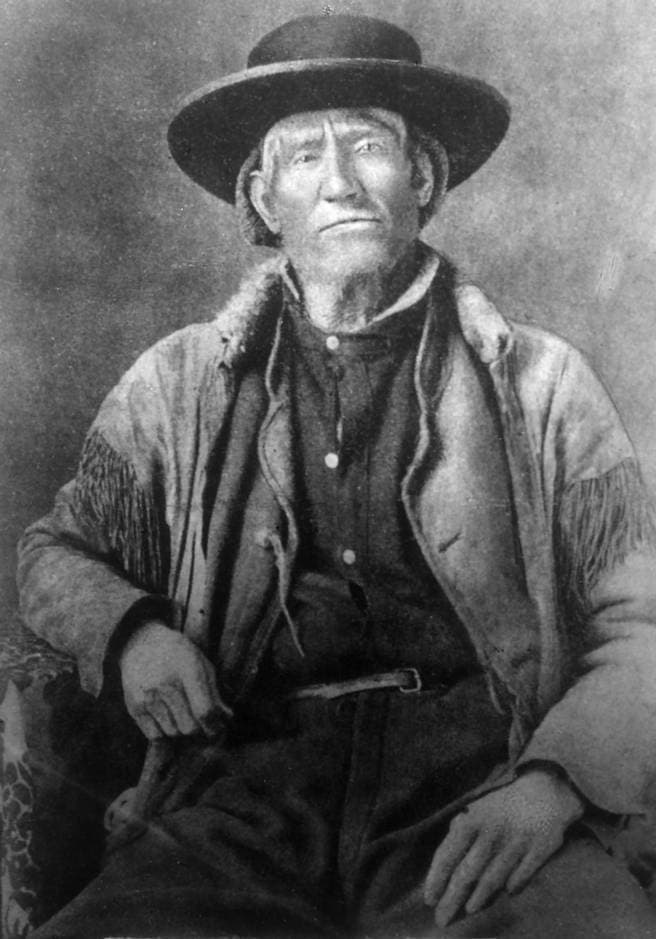
Fort Bridger State Historic Site preserves structures from five eras of occupation, including Jim Bridger's trading post, a US Army fort, and a Lincoln Highway hotel.
- Picnicking
- Nature Trails
- Historic Site
Wyoming State Parks
Official pageFort Fetterman State Historic Site
State Historic Site
Fort Fetterman, open to the public in summer, preserves a restored officers' quarters and ordnance warehouse with interpretive exhibits and grounds to walk.
- Hiking
- Picnicking
- Nature Trails
- Wildlife Viewing
Wyoming State Parks
Official pageFort Fred Steele State Historic Site
State Historic Site
Fort Fred Steele is a frontier Army post just off I-80 at Exit 228, with a history interlacing the military and the growth of Wyoming's lumber and livestock industries.
- Hiking
- Fishing
- Picnicking
- Nature Trails
Wyoming State Parks
Official pageFort Phil Kearny State Historic Site
State Historic Site
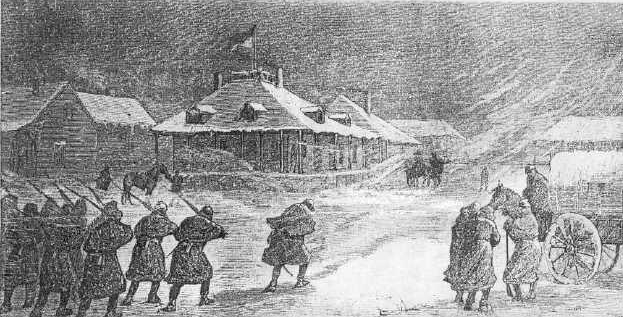
Fort Phil Kearny witnessed the dramatic events of Red Cloud's War from 1866 to 1868, and today encompasses 1,000 acres including fort grounds and two major battlesites.
- Picnicking
- Nature Trails
- Wildlife Viewing
- Winter Sports
Wyoming State Parks
Official pageGlendo State Park
State Park
Glendo State Park is a 22,000-acre park on Glendo Reservoir with 45 miles of non-motorized trails, six boat ramps, and one of the state's best walleye fisheries.
- Camping
- RV Camping
- Cabins
- Hiking
Wyoming State Parks
Official pageGranger Stage Station State Historic Site
State Historic Site
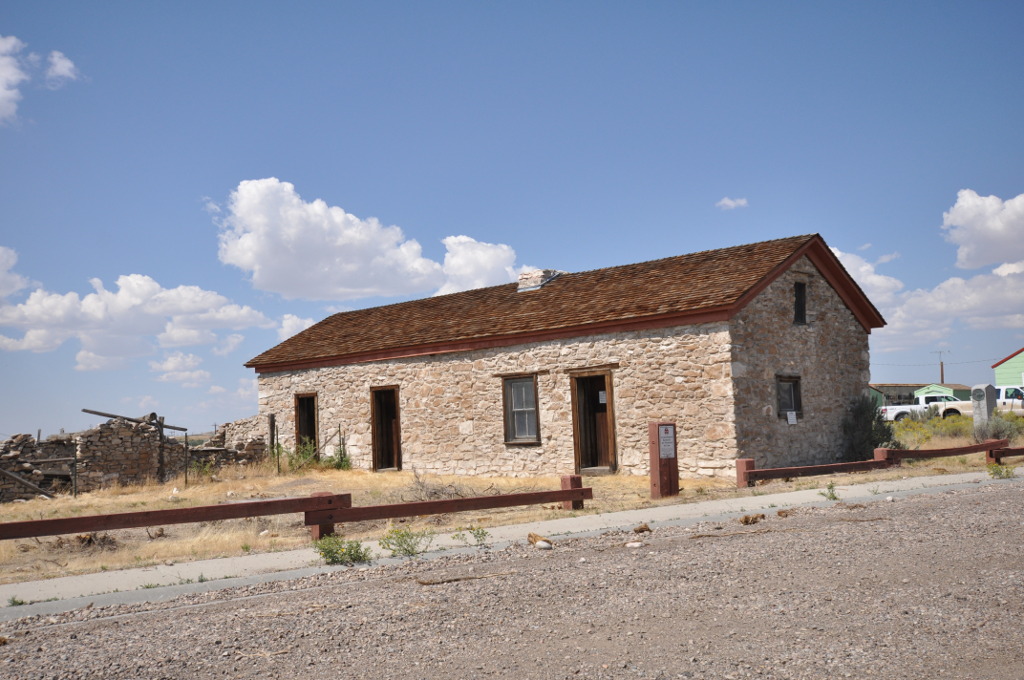
Granger Stage Station was built along the Overland Trail in the 1850s and served stage lines and the Pony Express, with travelers including Horace Greeley and Mark Twain.
- Historic Site
Wyoming State Parks
Official pageHawk Springs State Recreation Area
State Recreation Area
Hawk Springs State Recreation Area is a small site with 24 primitive walk-up campsites, a boat ramp, and a reservoir long known for fishing in southeastern Wyoming.
- RV Camping
- Fishing
- Boating
- Swimming
Wyoming State Parks
Official pageHot Springs State Park
State Park
Hot Springs State Park at Thermopolis flows over 1.8 million gallons of 128-degree mineral water daily, with a free bath house, 6.2 miles of trails, and a bison herd.
- Hiking
- Fishing
- Boating
- Swimming
Wyoming State Parks
Official pageIndependence Rock State Historic Site
State Historic Site
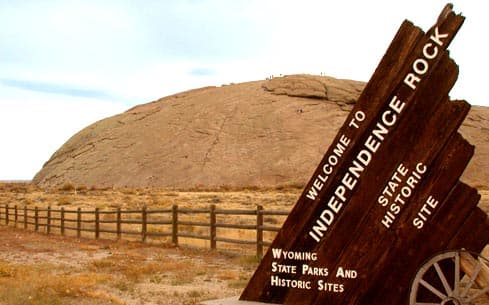
Independence Rock, known as the Register of the Desert, bears more than 5,000 emigrant names and was a landmark for over 550,000 westward travelers.
- Hiking
- Historic Site
Wyoming State Parks
Official pageKeyhole State Park
State Park
Keyhole State Park on the western edge of the Black Hills offers swimming, hiking, boating, water skiing, bird-watching, and fishing, with 10 campgrounds.
- RV Camping
- Cabins
- Hiking
- Fishing
Wyoming State Parks
Official pageMedicine Lodge Archaeological Site
State park system area
Medicine Lodge Archaeological Site protects sandstone cliffs covered with petroglyphs and pictographs, set in a valley with camping, fishing, and a creek beach.
- Camping
- RV Camping
- Hiking
- Fishing
Wyoming State Parks
Official pagePiedmont Charcoal Kilns State Historic Site
State Historic Site
Piedmont Charcoal Kilns preserves three and a half conical limestone kilns built in 1869 that supplied charcoal to Utah's iron smelting industry, on the edge of the Piedmont ghost town.
- Picnicking
- Historic Site
Wyoming State Parks
Official pageSeminoe State Park
State Park
Seminoe State Park sits on the northwest side of Seminoe Reservoir amid the Seminoe Mountains, an area once mined for gold, and was established in 1965.
- Camping
- RV Camping
- Hiking
- Fishing
Wyoming State Parks
Official pageSouth Pass City State Historic Site
State Historic Site
South Pass City preserves a restored gold-mining townsite with family cabins, a hotel, jail, and historic buildings, where visitors can pan for gold in Willow Creek.
Wyoming State Parks
Official pageTrail End State Historic Site
State Historic Site
Trail End State Historic Site is the 1913 Kendrick Mansion, a historic house museum in Sheridan filled with original objects on its original grounds.
- Hiking
- Picnicking
- Wildlife Viewing
- Historic Site
Wyoming State Parks
Official page










Show 4 more Wyoming parks
Camp Douglas Officers' Club State Historic SIte
State Historic Site
The Officers' Club is the only standing building of the World War II Douglas prisoner of war camp, which housed up to 2,000 Italian and 3,000 German POWs.
- Historic Site
Wyoming State Parks
Official pageLegend Rock State Petroglyph Site
State park system area
Legend Rock is a near-vertical cliff with more than 92 prehistoric petroglyph panels and over 300 figures, a sacred site for Native Americans for thousands of years.
- Historic Site
Wyoming State Parks
Official pageNames Hill State Historic Site
State Historic Site
Names Hill is a steep limestone cliff above the Green River where Oregon-California Trail emigrants carved their names, including the oldest pioneer inscription in Wyoming from 1822.
- Historic Site
Wyoming State Parks
Official pageRegister Cliff State Historic Site
State Historic Site
Register Cliff is one of the best trail registers in the desert, where countless emigrants inscribed their names in the soft sandstone a day's travel west of Fort Laramie.
- Historic Site
Wyoming State Parks
Official page
Inventory source: USGS PAD-US 4.1. Photos are public-domain or Creative Commons via Wikimedia Commons, credited per image. Official reservations and rules remain state-specific, so use the state booking links before committing to dates.
Frequently asked questions
When is the best time to visit Wyoming's national parks?
Summer (June through August) gives you the warmest weather and the fullest access to trails and park roads, but it is also the busiest stretch in the marquee parks. For the best balance, target early June or mid-September: the roads are open, the crowds thin out, and September adds golden aspens. Just pack for cold, because mountain nights can dip into the 30s and 40s F even in midsummer.
What is the best national park in Wyoming?
It depends on what you want. Yellowstone is the headliner for geothermal features like geysers and hot springs plus some of the best wildlife viewing in the country, while Grand Teton wins on dramatic, glacier-carved mountain scenery and alpine lakes packed into a more compact, walkable footprint. Many visitors do both in one trip since they sit right next to each other, connected by a single scenic highway.
Do you need a car to explore Wyoming's outdoors?
Yes, in practical terms a rental car is essential. Wyoming is the least populated state in the country, distances between outdoor areas are long, and there is almost no public transit linking parks, forests, and trailheads. Plan to drive, fuel up whenever you pass a station, and check seasonal road closures, since many high passes shut down with snow from roughly November into May.
Are there good outdoor spots in Wyoming besides the famous national parks?
Plenty. The Wind River Range near Lander and Pinedale offers serious high-country hiking and the rock climbing and disappearing river at Sinks Canyon State Park. The Bighorn Mountains hold 1,200 miles of trail and the Cloud Peak Wilderness, Hot Springs State Park in Thermopolis pairs a free mineral soak with a bison herd, and Curt Gowdy State Park near Cheyenne has 30 miles of top-tier mountain biking.