Harpers Ferry KOA (nearby)
- Season
- Generally open spring through fall.
- Sites
- Private RV and tent sites and cabins near the park.
- The closest full-service camping to the park.
National Park Service · West Virginia
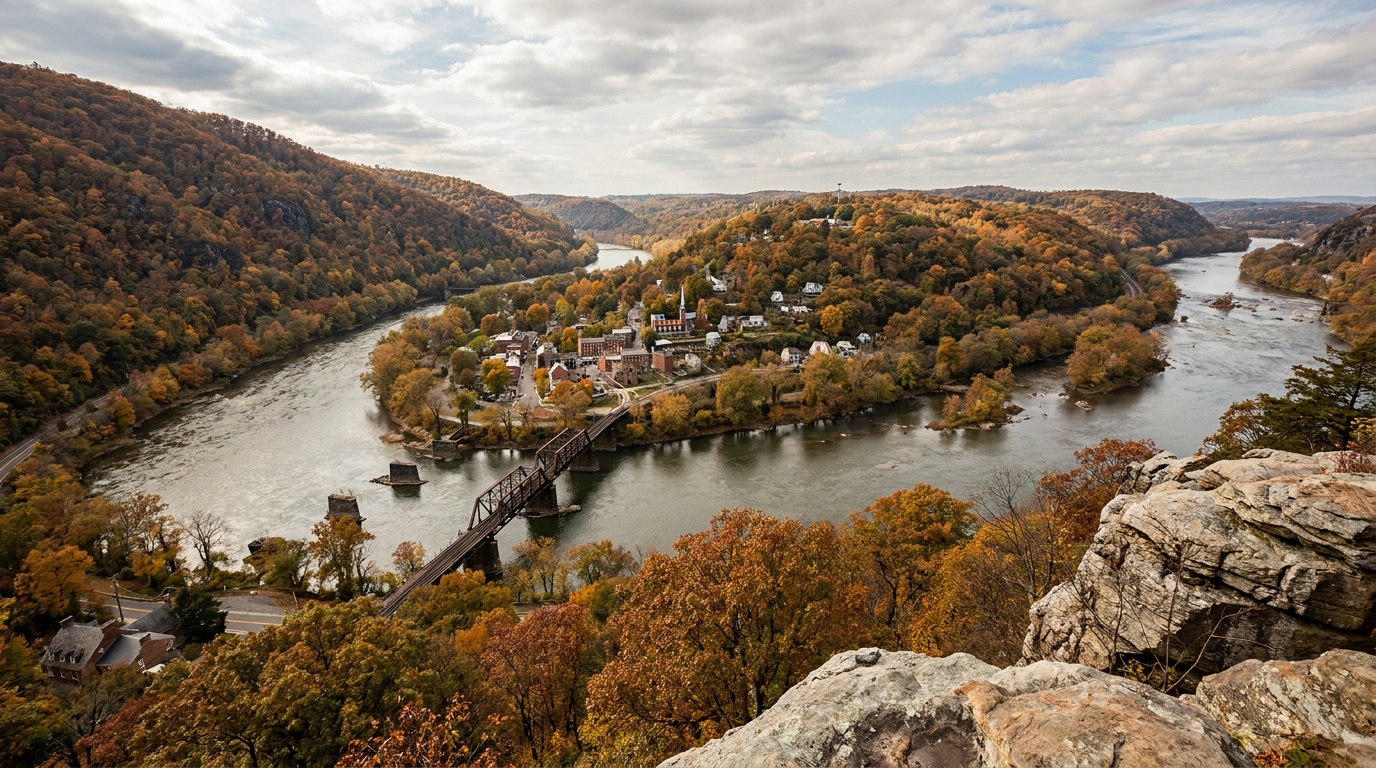
A restored 19th-century town at the dramatic meeting of the Potomac and Shenandoah rivers, where you park at the visitor center and ride a free shuttle into Lower Town.
Field briefing
Harpers Ferry National Historical Park starts with access, not mileage.
Before you go
That shuttle is the planning hook, especially on busy fall weekends when arriving early matters. There are no entry reservations. The park blends Civil War and John Brown history, the Appalachian Trail, and big river views, with the strenuous Maryland Heights hike as the signature overlook.
The landmarks worth the trip. Tap any photo to enlarge.
Weather, crowds, and what the season changes about the trip.
Mild, green, and sometimes wet, with high river flow and blooming hillsides.
Pack Rain shell, layers, and grippy shoes for cobblestone and stone steps.
Warm and humid, with afternoon storms and busy weekends in the historic town.
Pack Water, sun protection, and a weekday plan to avoid the worst shuttle lines.
Crisp, clear, and colorful, the most popular time, with foliage on the river bluffs.
Pack Warm layers, a camera, and an early arrival before the lot fills.
Cold and quiet, with occasional snow and a reduced but still atmospheric town.
Pack Insulation, traction for icy steps, and a check on winter hours.
Lower Town historic district
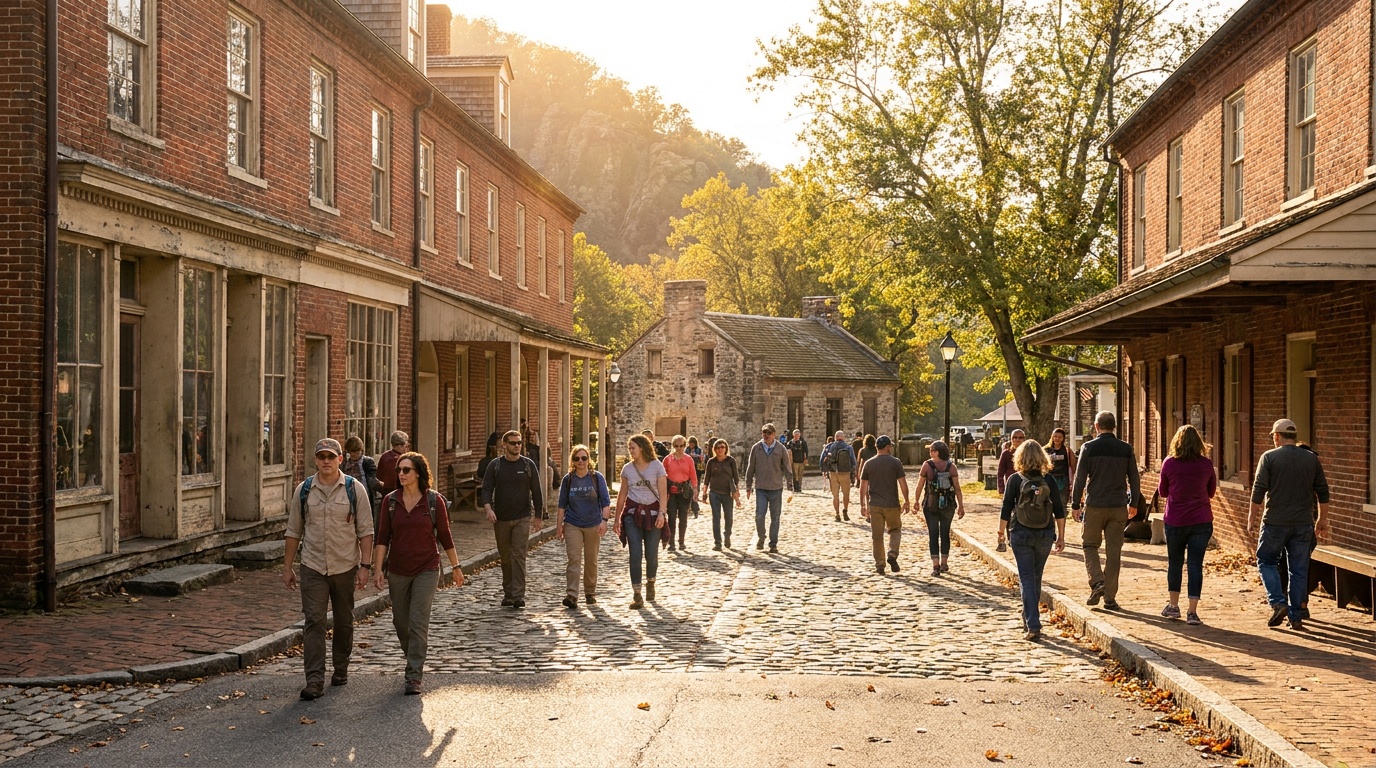
The restored shops, museums, and John Brown's Fort at the heart of the park, where most exhibits and ranger programs are. Reached by the free shuttle.
Maryland Heights overlook
A steep but iconic hike across the river for the classic postcard view down on the town and the river confluence.
Appalachian Trail and Jefferson Rock
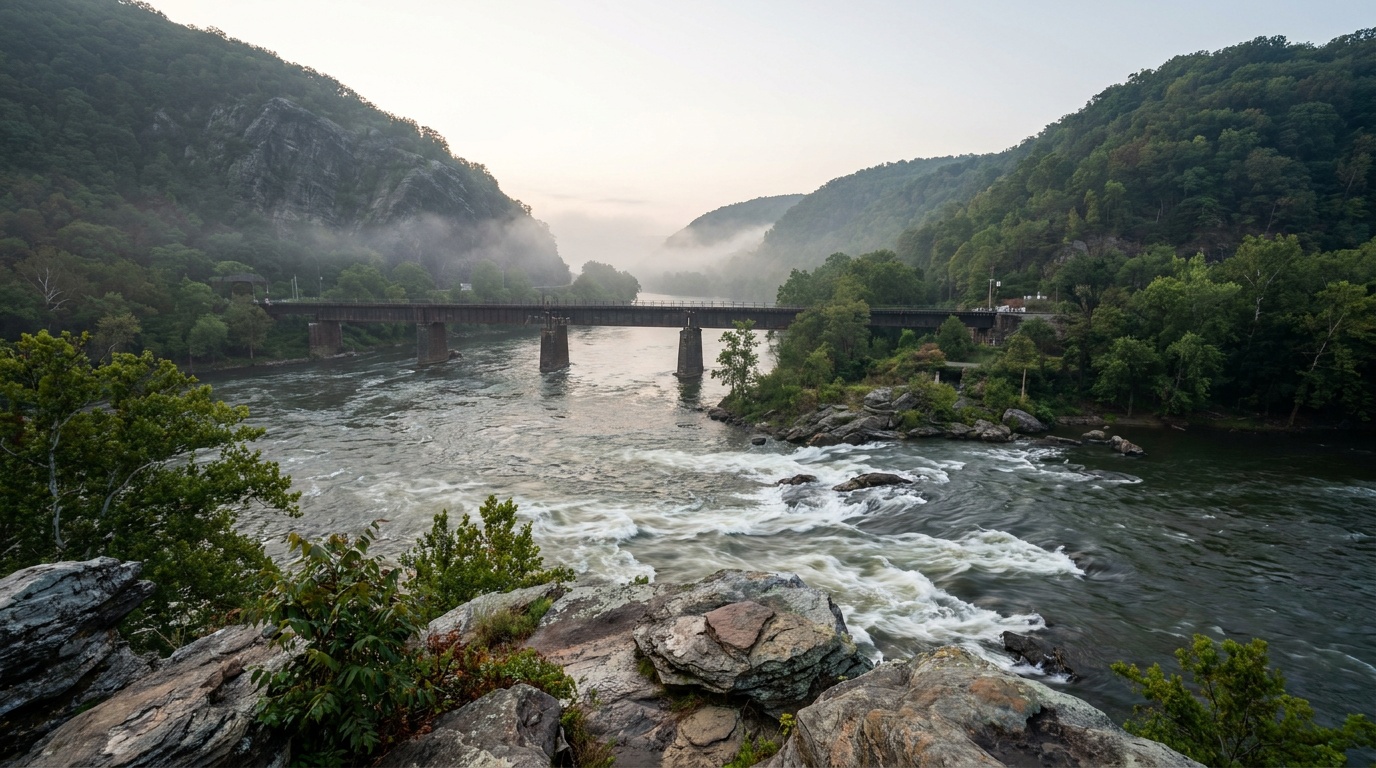
The AT runs right through town; a short walk up the stone steps to Jefferson Rock gives a famous view over the rivers.
Put the timed or highest-demand stop first, then keep the rest of the day close and low-friction. For one day in Harpers Ferry National Historical Park, time Lower Town historic district first, then keep Maryland Heights overlook and Appalachian Trail and Jefferson Rock close enough that the visit still feels relaxed.
Turn Harpers Ferry's conditions into water, pack, and sleep-system decisions.
Build around access
Plan the transfer before the trail list.
Plan your trip
2 quick tools, already seeded for Harpers Ferry National Historical Park. Tune the route, pack weight, weather margin, and overnight setup after the access plan is real.
Start with the gear decisions this park changes: footing, weather, camping, and water.
Kit Authority
Harpers Ferry National Historical Park packing list
0 of 15 packed. Check items as you pack, then take this list to the store, trailhead, or campsite.
Pack planning
Use this as a constraint check while you are still shaping the trip. The active checklist becomes useful once your route, dates, and sleep plan are set.
Checklist mode
15 items, grouped for the trip you are actually taking.
The buying guides that match what Harpers Ferry asks of your kit, with our current top picks across budget and use case.
There is no lodging or campground inside the park. The town of Harpers Ferry has historic inns and bed-and-breakfasts, and nearby Charles Town, West Virginia, and Frederick, Maryland, have more hotels. For camping, the Harpers Ferry KOA and Greenbrier State Park in Maryland are close options, and the Appalachian Trail Conservancy headquarters in town is a hub for thru-hikers. Many visitors day-trip from the Washington, D.C., area.
Camping reservations
Harpers Ferry has no campground inside the park, and Lower Town parking is effectively nonexistent, so the practical plan is to park at the visitor center and ride the free shuttle. For tents, use the nearby KOA or a Maryland state park.
Reviewed June 11, 2026
Booking window
No in-park camping and no entry reservations. The Lower Town shuttle is first come and included with the entrance fee.
Where to book or verify
Official NPS page on the visitor-center shuttle and Lower Town parking.
Maryland state park campground reservable through the state parks system.
Check for federal campground, backcountry, tour, and permit inventory tied to this park.
Campgrounds to know
Make the transfer plan before the trail plan.
Weather windows, boat schedules, flight buffers, and backup days shape what is realistic.
Getting there
Transfer plan
Harpers Ferry sits where West Virginia, Maryland, and Virginia meet, about an hour from Washington, D.C., off US 340.
Shuttle access
Drive to the main visitor center, where the large lot and the free Lower Town shuttle are, rather than trying to park in the historic district.
Local movement
Trains on the MARC and Amtrak Capitol Limited also stop in town, dropping you right in Lower Town if you want to skip driving entirely.
Pair this with lodging: the best base is the one that protects the departure window, pickup point, or weather buffer.
Park at the main visitor center off US 340 and ride the free shuttle into the historic Lower Town. Parking in Lower Town itself is essentially unavailable, so the shuttle is the standard way in and it is included with your entrance fee.
The fee is $20 per private vehicle, valid for 3 days, and it includes the Lower Town shuttle. Motorcycles are $15 and walk-in or bike entry is $10 per person.
Maryland Heights is the signature hike, a strenuous climb across the river to the iconic overlook of the town and the river confluence. For something shorter, the stone steps up to Jefferson Rock give a famous view in about a mile.
Yes. MARC commuter trains and Amtrak's Capitol Limited stop in Harpers Ferry, dropping you right in Lower Town, which lets you skip driving and the shuttle entirely.