Fort Robinson State Park
Details- Season
- Generally spring through fall, with year-round lodge options.
- Sites
- Developed and electric campsites plus historic lodging.
- The nearest substantial camping, north of the monument near Crawford.
National Park Service · Nebraska
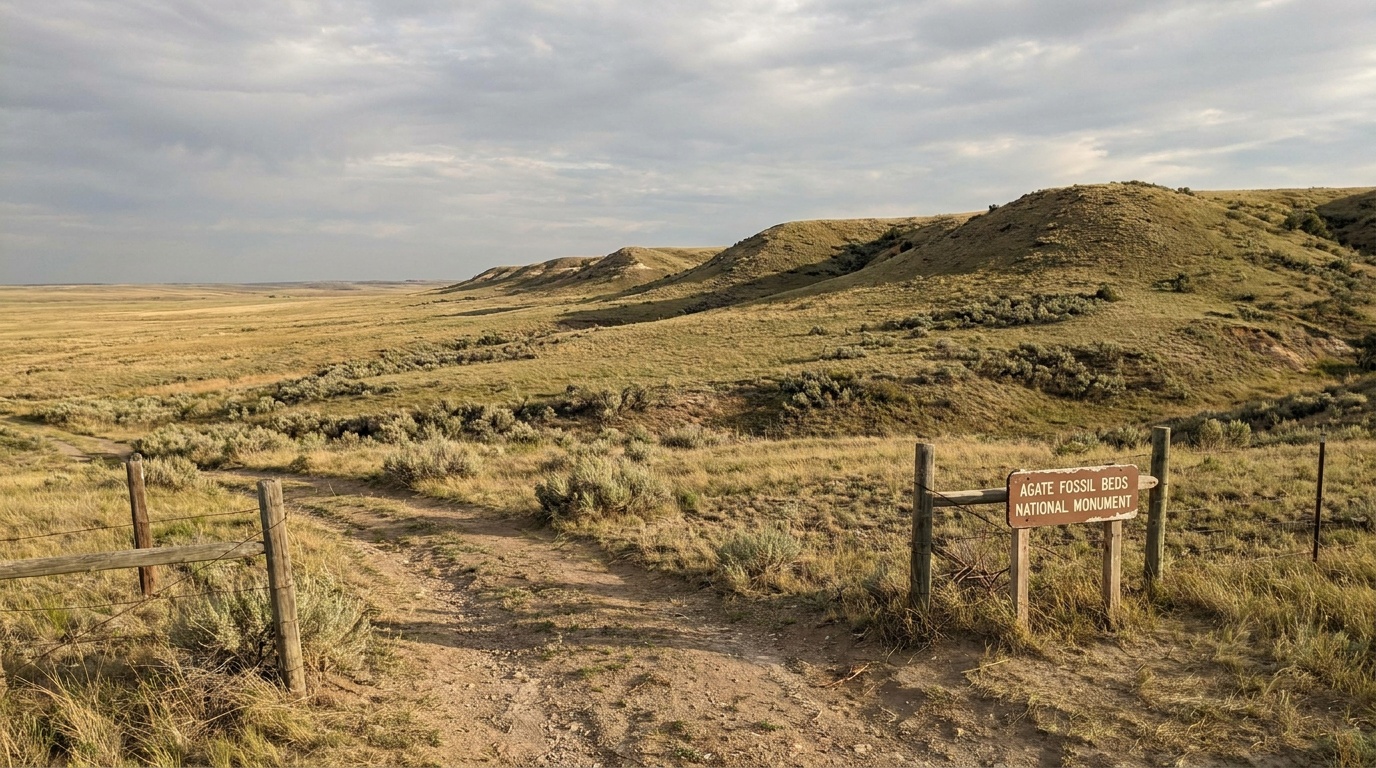
Remote Nebraska grassland that yielded world-class Miocene mammal fossils, paired with the James Cook collection of Lakota artifacts gathered through his friendship with Chief Red Cloud.
Field briefing
Agate Fossil Beds National Monument changes fast with season and elevation.
Before you go
There are no services for many miles, so fuel up and carry water and food before you arrive. The visitor center runs longer hours in summer (9 a.m. to 5 p.m. mid-May to September) and shorter ones the rest of the year, so confirm hours before a long drive. The trails are open and exposed.
The landmarks worth the trip. Tap any photo to enlarge.
Weather, crowds, and what the season changes about the trip.
Green and breezy, with cool mornings and warming afternoons on the prairie.
Pack A wind layer and water; the trails are fully exposed grassland.
Warm to hot with strong sun, big skies, and afternoon thunderstorms.
Pack Sun protection, plenty of water, and a hat for the shadeless trails.
Crisp, golden, and quiet, with comfortable hiking and clear light.
Pack Layers for cool mornings and a wind shell for the open prairie.
Cold, windswept, and very quiet, with reduced hours and possible snow.
Pack Real insulation and wind protection, and a check on winter hours.
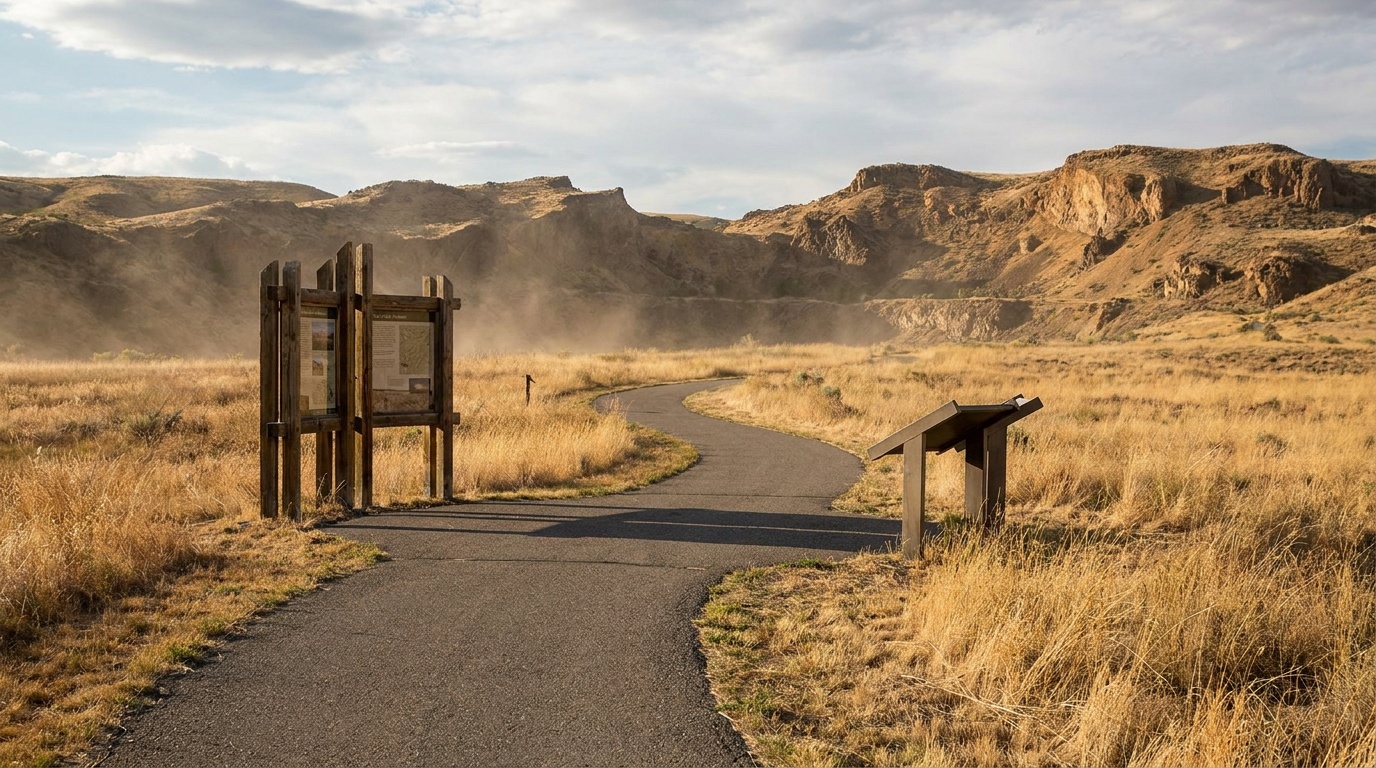
Fossil Hills Trail
A roughly 2.7-mile round-trip paved and gravel path to the hills where the famous Miocene mammal skeletons were quarried, with interpretive panels along the way.
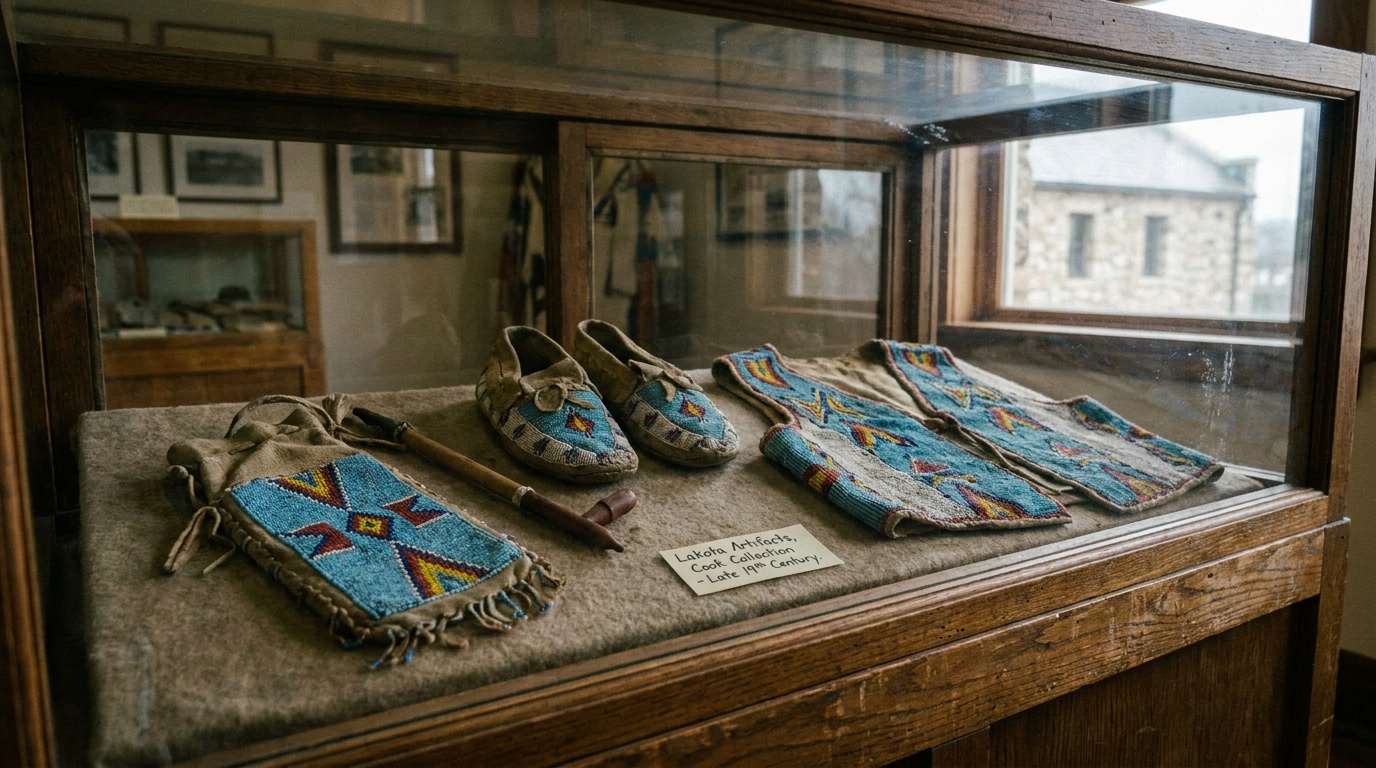
Cook Collection of Lakota artifacts
Gifts from Chief Red Cloud and other Lakota leaders to rancher James Cook, displayed in the visitor center. A rare and personal record of that friendship.
Daemonelix Trail
A short loop to the 'devil's corkscrew' spiral burrows of an ancient land beaver, one of the monument's most unusual fossils.
Put the timed or highest-demand stop first, then keep the rest of the day close and low-friction. For one day in Agate Fossil Beds National Monument, time Fossil Hills Trail first, then keep Cook Collection of Lakota artifacts and Daemonelix Trail close enough that the visit still feels relaxed.
Turn Agate Fossil Beds's conditions into water, pack, and sleep-system decisions.
Build around conditions
Let season, elevation, and weather set the plan.
Plan your trip
2 quick tools, already seeded for Agate Fossil Beds National Monument. Tune the numbers around temperature swings, footing, layers, and how much margin the route needs.
Start with the gear decisions this park changes: footing, weather, camping, and water.
Kit Authority
Agate Fossil Beds National Monument packing list
0 of 16 packed. Check items as you pack, then take this list to the store, trailhead, or campsite.
Pack planning
Use this as a constraint check while you are still shaping the trip. The active checklist becomes useful once your route, dates, and sleep plan are set.
Checklist mode
16 items, grouped for the trip you are actually taking.
The buying guides that match what Agate Fossil Beds asks of your kit, with our current top picks across budget and use case.
There is no lodging or camping at the monument, and the nearest towns are small. Harrison is the closest community; Crawford, Scottsbluff, and Gering offer more motels and services. For camping, Fort Robinson State Park to the north and the campgrounds around Scotts Bluff are the practical options for a remote-corner-of-Nebraska trip.
Camping reservations
Agate Fossil Beds has no campground, no gas, and no food on site. The planning reality is the long, empty drive: arrive prepared and check seasonal visitor-center hours.
Reviewed June 11, 2026
Booking window
Check the official park camping page before choosing dates.
Where to book or verify
Check for federal campground, backcountry, tour, and permit inventory tied to this park.
Campgrounds to know
Plan the handoff from arrival to shuttle.
Parking, pedestrian entrances, and shuttle timing decide how calmly the first morning starts.
Getting there
Arrival note
Agate Fossil Beds sits in the far northwest corner of Nebraska, on State Route 29 about 25 miles south of Harrison and a similar distance north of Mitchell.
Access note
It is roughly an hour from Scottsbluff and well off any interstate, so the approach is long and empty.
Car strategy
Fill the tank and carry supplies before you head out, and plan the visit around the seasonal visitor-center hours.
Pair this with lodging: sleep where the park transfer is simple, especially if your route needs an early start.
Yes. There is no entrance fee. The trails are open sunrise to sunset, and the visitor center runs longer hours in summer, roughly 9 a.m. to 5 p.m. mid-May through September, and shorter hours the rest of the year.
The Fossil Hills Trail leads to the hills where complete Miocene mammal skeletons were quarried, and the visitor center holds those fossils plus the Cook Collection of Lakota artifacts. The short Daemonelix Trail visits the spiral 'devil's corkscrew' burrows.
A collection of Lakota artifacts and gifts given to rancher James Cook by Chief Red Cloud and other Lakota leaders through their long friendship, displayed in the monument's visitor center. It is an unusually personal record of that relationship.
No. The monument is remote, with no gas, food, lodging, or camping on site and few services in the surrounding area. Fuel up and carry water and food before the drive, and base in Harrison, Crawford, or Scottsbluff.